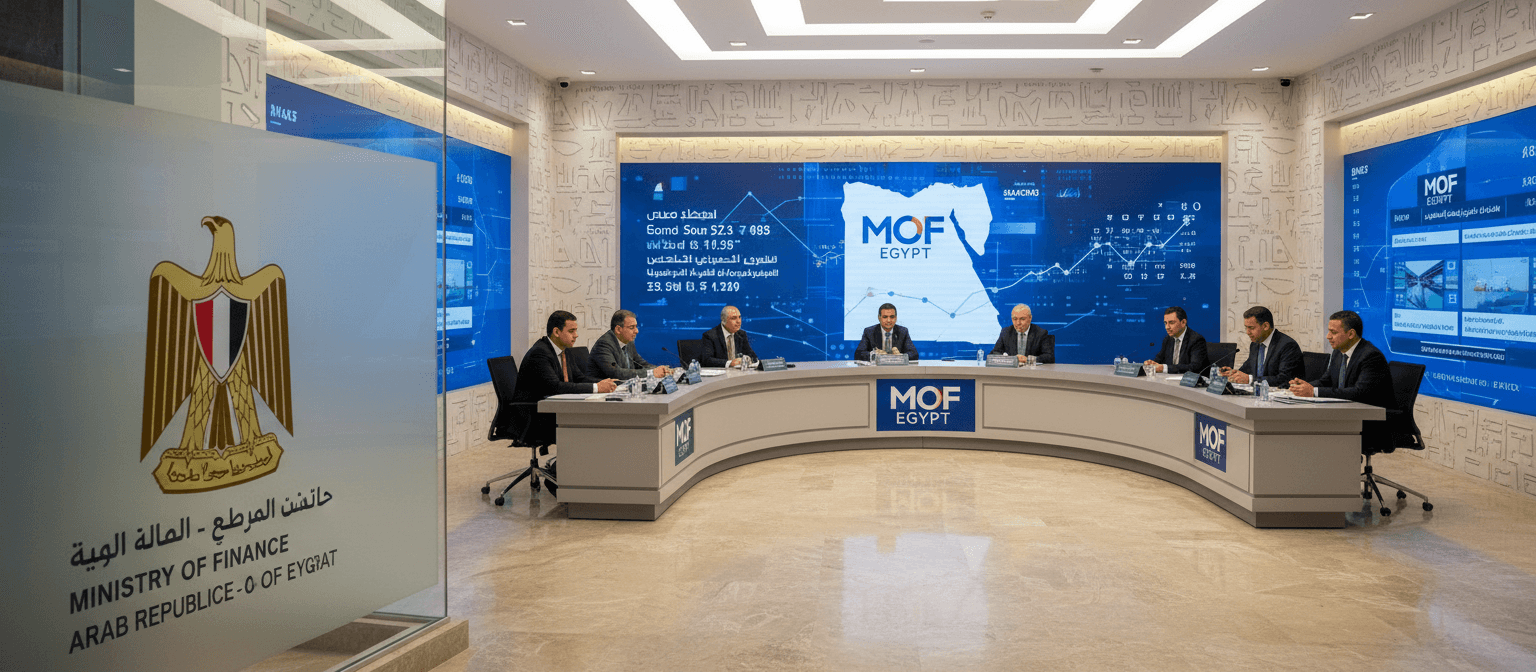

As a leading international expert on financial policies and employment, ILO invites Dr. Radwan to give a lecture on the relationship between financial policies and social justice
The International Labour Organisation (ILO) has invited Egyptian Finance Minister, Dr. Samir Radwan, to give a lecture in its annual conference which is currently in session in Geneva, Switzerland, at...
The International Labour Organisation (ILO) has invited Egyptian Finance Minister, Dr. Samir Radwan, to give a lecture in its annual conference which is currently in session in Geneva, Switzerland, attended by an elite of world dignitaries. Participating as well are official ministerial delegations from most world countries. Dr. Radwan is invited to lecture as one of the most important world experts in the field of financial policies and employment, which further proves the distinguished status Egypt has worldwide. In the speech he gave on Monday on the relationship between financial policy and social justice, Dr. Radwan said that social justice depends on equity in the distribution of incomes and solidarity among the members of the society—two of the most important principles of human rights. He further mentioned that the financial policy adopted currently by Egypt is based on the principle of enabling individuals to choose freely. This is accomplished through securing a good-quality education and a high standard of health. The new general state budget reflects these principles where spending focuses on the public rather than on corporations. For instance, he added, the volume of spending on health has risen from LE 20.3 billion in the current fiscal year to LE 24.318 billion in the coming fiscal year, an increase of 20%. Spending on education has risen as well from LE 47 billion currently to LE 54.3 billion in the new budget, at 15%. Moreover, the quota of social protection programs in the allocations of the new budget has leapt at a rate of 34% from LE 114 billion currently to LE 152.9 billion in the new budget. One of the mechanisms of public empowerment is to augment training allocations by around LE 1.5 billion to two billion Egyptian pounds, to enable young people to acquire good training which is necessary for finding decent-income jobs. In addition, there is also a low-cost housing program for which LE 10 billion has been allocated in the new budget. Among these mechanisms, the Minister of Finance also noted interest in stimulating the establishment of small and medium enterprises which are projects requiring high rates of employment. One public bank has been entrusted with financing these projects. Additionally, a batch of facilities are currently being prepared for establishing such projects which will enjoy a whole range of services to boost their competitiveness, marketing capabilities, productivity, process of designing products and other factors to guarantee their competitiveness at home and abroad. Dr. Radwan added that the volume of spending on investments has risen from LE 40 billion to LE 60 billion, an increase of 39%. These investments will be directed to the basic infrastructure projects which will in turn stimulate private sector projects. Additionally, there are a number of projects offered for bidding under the P.P.P. system. The country faces several challenges ahead, most important of which are the rebuilding of the Egyptian economy on the new principles so that citizens may be able to access high-quality public services. This is a target of the new general budget to be accomplished through social justice in both spending and revenues, in addition to the balanced growth of the economy. One of the most relevant significant aspects of the new budget is raising the minimum wage limit from LE 425 to LE 700. The target is to enhance the conditions of the workforce and the ratio of the minimum limit to GDP which deteriorated in the period from 1984 to 2007 by around 60%. As for general revenues, the Minister disclosed that the principle of social justice requires introducing the escalating taxation system at 25% on the profits of companies and individuals whose annual incomes are in excess of LE 10 million, and raising the tax on cigarettes by an extra 10%. The gains of economic growth achieved in the last few years were not to the benefit of the average citizen because of the absence of the principle of social justice. Previous financial policies gave priority to large corporations creating an atmosphere favourable to big entrepreneurs at the expense of small and medium enterprises. Therefore, those who were well educated and enjoyed skills could join large corporation and benefited from economic growth. On the other hand, the poor and those with little education suffered from very high rates of unemployment. Although average rates of poverty have decreased in the recent years, the rate of the poor in the Egyptian society has risen by 20% as a result of the high rates of inflation and the high costs of food. Wit the new democratic changes in Egypt and the so-called economic shock, all economic rates have slowed down as a result of the decrease in tax collection, Suez Canal revenues, remittances of expatriate workers, and exports. This threatens to create a financial gap in the general budget of between USD 9 and 12 billion.
 Next article