
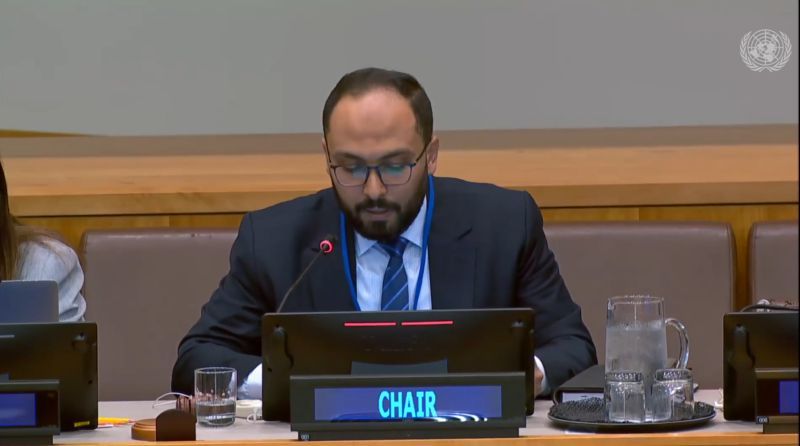
Assistant Minister of Finance for Tax Policy, during his chairmanship of the Intergovernmental Negotiating Committee at the United Nations on the Framework Convention on International Taxation: All appreciation to the member states of the United Nations for their great confidence in electing me as Chairman of the Intergovernmental Negotiating Committee
4 priorities to ensure transparency, equality and international tax justice in a rapidly evolving world
A binding framework with clear and fair principles for global tax governance to formulate a comprehensive, consistent and integrated agreement
Ending “profit shifting” and close any loopholes that enable multinational companies to avoid taxes
Maximizing the voice of developing countries in comprehensive negotiations to ensure that the agreement addresses the challenges they face, starting from resource mobilization to the sustainability of debt indicators
Updating tax rules to become more suitable for the digital economy
The way forward requires bold ideas and solidarity.
Together we can formulate an agreement that reflects our shared commitment to a more just and sustainable world
Ramy Youssef, Assistant Minister of Finance for Tax Policy and Development, expressed his appreciation to the member states of the United Nations for their great confidence in electing him as Chairman of the Intergovernmental Negotiating Committee on International Tax Framework, saying: "The way forward requires bold ideas and solidarity, and together we can formulate an agreement that reflects our shared commitment to a more just and sustainable world."
Ramy Youssef said, during his chairmanship of the Intergovernmental Negotiating Committee at the United Nations on the International Tax Framework Convention in New York, that there are 4 priorities to ensure transparency, equality and international tax justice in a rapidly evolving world, and we will work during the coming period to achieve them; to achieve the desired goals.
He added that we look forward to working together and strongly to build a binding framework with clear and fair principles for global tax governance, which drives the path of formulating a comprehensive, consistent and integrated agreement, along with ending "profit shifting" and closing any loopholes through which multinational companies may be able to avoid taxes.
He pointed out the importance of maximizing the voice of developing countries in comprehensive negotiations; to ensure that this framework agreement addresses the challenges facing these countries, starting from resource mobilization to the sustainability of debt indicators, noting the need to update tax rules to become more appropriate and responsive to the digital economy.
- رامي يوسف
 Next article