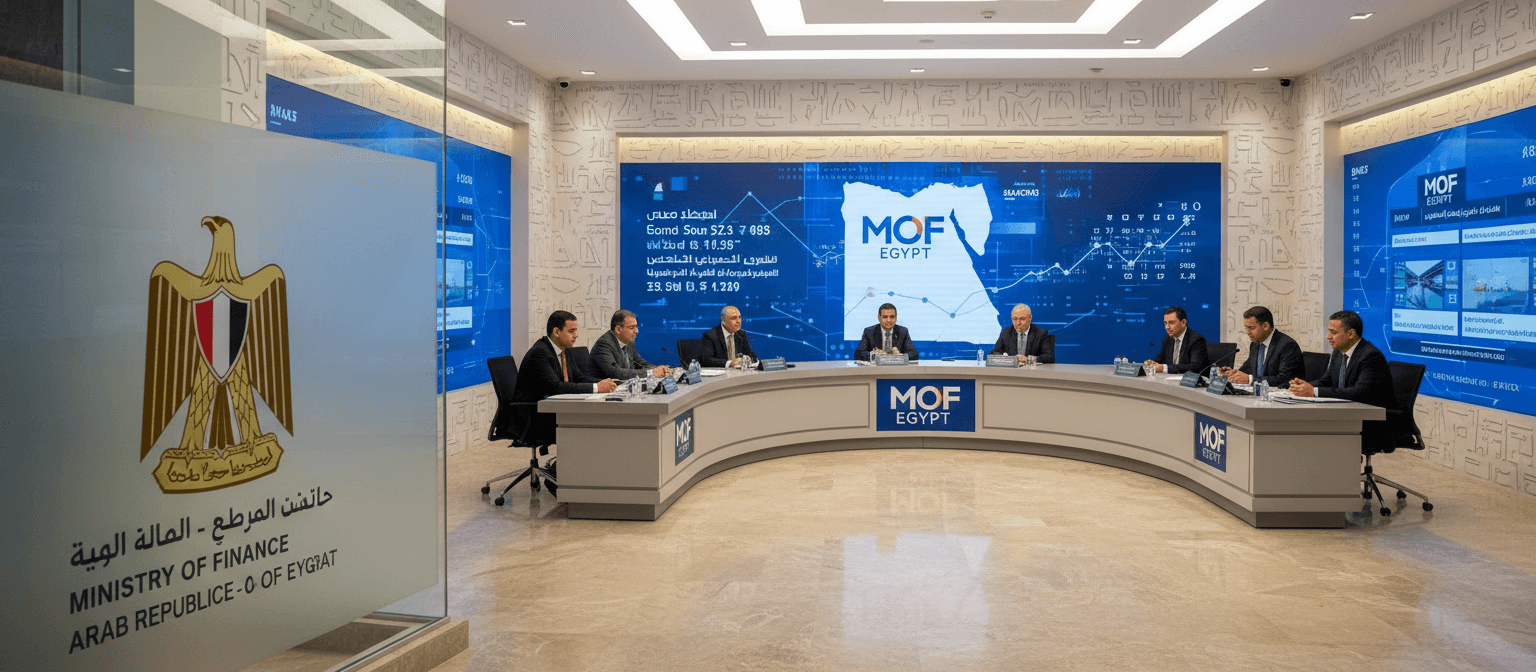

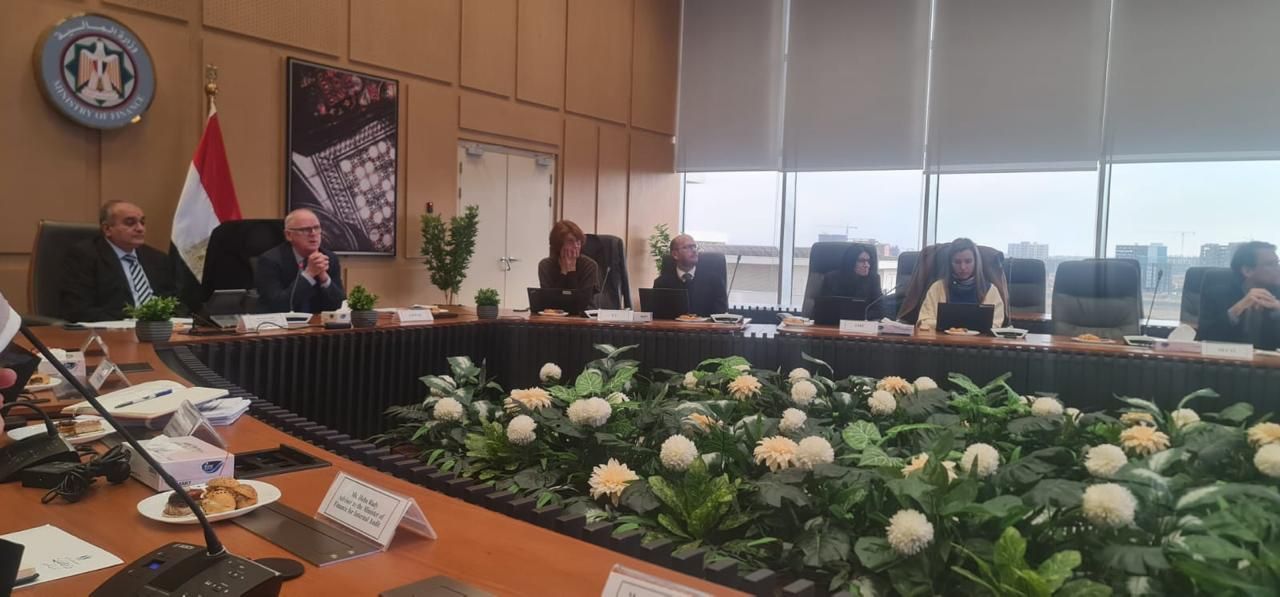
Deputy Minister of Finance at the Coordination Committee Meeting on Public Financial Management Development with Representatives of International Financing Institutions
Strengthening cooperation with international development partners to maximize the impact of technical and financial support programs, aligned with the state’s fiscal reform priorities, while advancing public financial management reform and improving financial and economic performance indicators
Yasser Sobhi, Deputy Minister of Finance for Fiscal Policies, affirmed the Ministry of Finance’s commitment to continuing the public financial management reform track by strengthening cooperation with international development partners.
This approach aims to maximize the benefits of technical and financial support programs and align them with the actual needs of the state’s fiscal reform priorities and plan, ensuring optimal utilization of available resources in support of the government’s reform agenda.
He noted that these efforts contribute to supporting the state’s implementation of reform programs, stimulating economic growth, enhancing the quality of public services, and improving the efficiency and effectiveness of social protection programs.
These remarks were made during the third annual meeting of the Public Financial Management Coordination Committee, held with representatives of international financing institutions, including the Organisation for Economic Co-operation and Development (OECD), the World Bank, the International Monetary Fund (IMF), the British Embassy, the European Union, the Swiss State Secretariat for Economic Affairs, and the United Nations Development Programme (UNDP).
During the meeting, the Deputy Minister reviewed recent developments in the state’s public finance performance and the key reforms implemented over the past year.
These included the first-time application of the Medium-Term Budget Framework, the transition toward program- and performance-based budgeting, the development of government debt management tools and practices, the introduction of tax facilitation packages and initiatives, the strengthening of public financial risk management, and the issuance of the medium-term public finance strategy.
These reforms have collectively contributed to improving financial and economic performance indicators.
Sobhi highlighted that Egypt has achieved positive economic indicators, reflected in a strong growth rate recorded during the first quarter of the current fiscal year.
He pointed to increased private investment, industrial activity, and exports during the previous fiscal year, alongside higher tax revenues without imposing any additional burdens on the business community, the achievement of a primary surplus relative to GDP, and declining inflation rates.
The Deputy Minister added that discussions during the meeting covered the key outcomes of cooperation with international financing institutions over the period from 2023 to 2025, as well as future objectives for the coming year.
Participants also coordinated on support programs to ensure integration and avoid duplication of activities, in line with the objectives of the public financial management reform agenda.
He further noted that the meeting addressed the Ministry’s priorities across several areas, including enhancing effective and simplified communication with citizens, continuing the implementation of program- and performance-based budgeting, gender-responsive and climate-responsive budgeting, internal audit, and government procurement.
Discussions also emphasized expanding digital transformation and the use of artificial intelligence in public financial management to optimize data utilization, improve decision-making efficiency, and support sustainability.
- نائب وزير المالية فى اجتماع اللجنة التنسيقية لتطوير إدارة المالية العامة مع ممثلى منظمات التمويل الدولية
 Next article