
Dr. Youssef Boutros-Ghali: General budget realizes results exceed projections, despite the two global economic crisis
-
The initial results of FY. 2008/2009 budget assures:
- 6.9% overall deficit for the second consecutive year, despite funding of financial procedures package.
- Decline in aggregate government debt from 120% of GDP in 2005 to 80.6% in 2009.
- 13.7% represents the ratio of external government debt to GDP, decreased by 6.3 points less than 2005.
- Public revenues increased by 24% up to 284.8 billion pounds, of which 163 billion pounds from tax revenues.
- 128.8 billion pounds allocated for subsidy and social benefits, higher by 40% than last year.
- 16.5% increase in wages and employees compensations and 41 billion pounds allocated for government investments.
- 1% decline in customs revenues due to customs reductions and exemptions.
Dr. Youssef Botross Ghali, the Minister of Finance announced that the initial results of the state's general budget performance for 2008/2009, revealed a remarkable improvement in macroeconomic performance, as the budget's overall deficit ratio to GDP remains at 6.9%, the same ratio for last year, compared to 9.6% in 2004/2005. It is a significant achievement within the global financial crisis that devastated growth and deficit rates in many developed and emerging countries, particularly, when it is the second global crisis which the Egyptian economy faces for the second consecutive year after the unprecedented increase in supply and food commodities all over the world in 2007/2008.
The Minister noted that the government seeks to reduce the general budget deficit to 3% of GDP by 2014/2015.
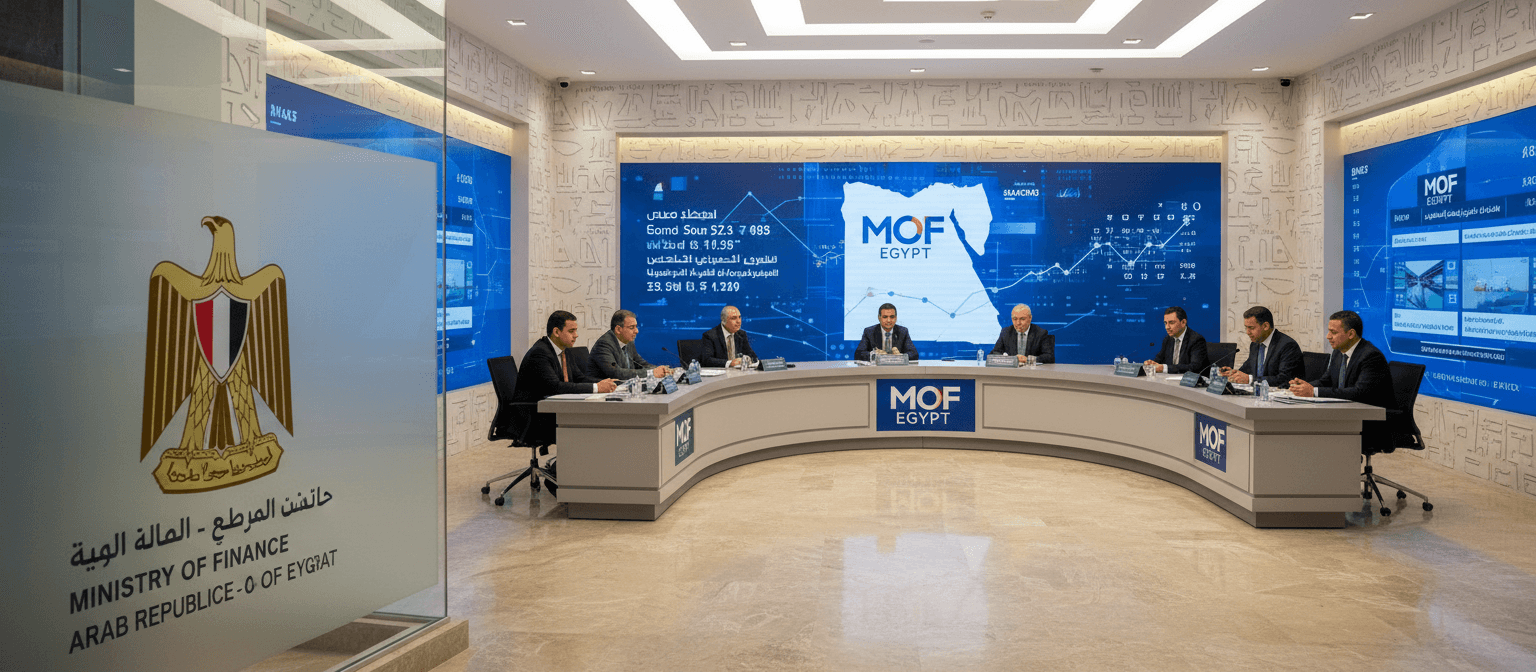
In an expanded meeting held the day before with the officials of budget sectors in the Ministry, to discuss and evaluate indicators of local economy performance, the Minister said that total public revenues increased by 24% up to 274.8 billion pounds, versus the increase of public expenditure by 21.7% to reach 343.7 billion pounds, asserting that such improvement of public revenues contributed in government domestic and external debt stability, compared to the figures last year amounting to 8.6% of GDP, and 120.6% in 2004/2005.
Dr. Ghali explained that the improvement in budget results is due to the control and the rationalization of expenditure within the state's general budget agencies, development of public resources and linking them much more with economic activity growth, in addition to the development of tax system, the increased efficiency of tax administration and tax compliance, which occurs gradually and successfully in light of the development of tax system in Egypt which began in 2004.
The Minister explained that the stability of budget overall deficit rate was achieved despite the economic activity in Egypt was affected by the global crisis. GDP growth rates decreased because of the decline in some important proceeds such as: Suez Canal revenues, which was affected by the international trade, the high increase in employees wages by 16.5% more than last year and the implementation of financial package to stimulate the economy, amounting to 15 billion pounds through 2008/2009. In this context, the Minister of Finance confirmed that the financial package components were carefully selected, so that they are concentrated mainly in investments directed to infrastructure, potable water and sewerage projects. Accordingly such spending has both social and development dimensions and will have a sustainable economic benefit.
Dr. Ghali added that the general budget performance succeeded in achieving objectives of economic activity increase, creation of new job opportunities, the execution of President Mobarak's platform by increasing wages of employees and pensioners, and taking into account the social dimension through the provision of supply commodities and major services and supporting the most needy segments, and at the same time achieving financial stability and controlling public debt rates.
The Minister explained that general budget overall deficit rate is expected to increase gradually in the current FY. 2009/2010, due to the repercussions of the global financial crisis, which partially affects the economic activities and leads to the decline of public revenues. However, it is expected that budget deficit will return to its downward trend through the following years according to a schedule to ensure financial sustainability and to direct state resources to development purposes, rather than using them in repayment of debt burdens and incurring debt burdens to the coming generations.
Regarding the initial features of budget results of FY. 2008/2009, Dr. Ghali asserts that the aggregate public expenditure increased by 22% more than last year, up to 343.7 billion pounds, a ratio of 33% to GDP.
Wages and employees compensations spending increased by 16.5%, amounting to 73.2 billion pounds, after the payment of the approved allowance in Mai 2008, a ratio of 30% of the base salary, in addition to other periodic bonuses and salary increases. Last year the budget also saw the implementation of teacher's cadre in two phases and improving doctor's salaries.
Spending on government investment increased by 18% higher than the previous year, amounting at about 41 billion pounds, including the financial package to activate economy, which accelerate implementing investments in potable water, sewerage, roads and bridges projects, various development projects in many governorates, health services and building school. Beside such investments, there is the private sector partnership program, which began the implementation of a sewerage project.
The Minister added that spending on subsidy, grants and social benefits reached around 128.8 billion pounds, an increase by 40% higher than the previous year, as subsidy spending raised by a ratio of 14% up to 96 billion pounds, of which 63 billion pounds earmarked for oil products subsidy, and almost 21 billion pound for supply commodities, in addition to funding potable water programs subsidy, low-income segments housing, transport and transportation, student medical insurance and children medicines, farmers support, industrial development, promoting exports and other programs, aiming the creation of job opportunities and the provision of goods and services at prices affordable to low-income brackets.
On the side of public resources, Hany Kadry, deputy of the Minister of Finance said that revenues and grants increased by a ratio of 24% up to 275 billion pounds, representing 26.4% of GDP, an increase by two points percent higher than the previous year, indicating to higher flexibility of public revenues and coping with GDP and higher economic activity.
Mr. Hany added that, tax revenues amount to 163 billion pounds, increased by more than 20% from the previous year, representing 15.7% of GDP.
Income Tax increased by 20%, higher than the previous year, amounting to about 8.6 billion pounds. Also corporate tax, excluding sovereign authorities, increased by a ratio of 28.7% up to 20.6 billion pounds.
Tax on goods and services increased by 25%, recording around 62 billion pounds, a ratio of 6% of GDP, compared to 5.5% in the previous year. The high increase in such tax reflects an increase of domestic demand in consumption and investment market.
At the same time, customs revenues decreased by 1%, recording 14 billion pounds, due to the reductions of customs tariffs, that were applied during the last two years and due to the decline in world prices. Foreign grants revenues increased up to 8.8 billion pounds, compared to 1.5 billion in the previous year.
Total government debt was projected to reach 839 billion pounds, 81% of GDP, representing sustainability, compared to last year, but realizing remarkable decline than previous years, where it reached 121% of GDP in FY. 2004/2005. Domestic debt of general budget agencies recorded about 695 billion pounds, a ratio of 67% of GDP, the same ratio of the previous year, decreased remarkably from debt rates in 2004/2005, which recorded 101% of GDP. It is expected that foreign debt will reach about 143 billion pounds, a ratio of 13.7% of GDP, compared to 20% of GDP in FY. 2004/2005.
It is expected that the Ministry of Finance will announce the final results of general budget within the next few weeks, after gathering the final data from all agencies and authorities.
Last January, the government presented to the people's assembly requesting an additional appropriation equals 13.5 billion pounds to fund the financial package to stimulate economy in facing the global crisis (of which 10.8 billion pounds to increase investments, 2.7 billion pounds increase in subsidy spending). In addition to customs tariff reduction and capital goods exemption from sales tax for one year, within domestic production stimulus procedures, costing about 1.5 billion pounds.
It was assumed that such procedures would rise the overall deficit in the amended budget, approved by the people's assembly in FY. 2008/2009, up to 8% of GDP rather than 6.9% in the original budget, but the realized economies in expenditures and the increased revenues more than the original estimates, maintained the deficit's rate at 6.9%.
The IMF's report, which was issued last week, praised the success of the Egyptian economy in facining the global crisis, as the report expected that the Egyptian economy's growth rate will reach about 4.5%, which is considered a good performance in light of the current global environment. The report praised also the financial and monetary policies followed by the government, which contribute in this performance and alleviate the global economy showdown on economic activities in Egypt.
The report shows that the economic reforms in Egypt since 2004 provided an opportunity for fiscal and monetary policy by creating a margin to move in the area of macroeconomic policy and facing the adverse global conditions.
(Source: Ministry of Finance)
 Next article