
Egypt's Boutrous-Ghali, Nobel Winner Stigliz Discuss Egypt's Reforms
Cairo, Egypt, 17 January 2011 - Egyptian Minister of Finance Dr. Youssef Boutros-Ghali and Nobel Laureate Professor Joseph Stiglitz were among a number of senior thought leaders discussing the effects...
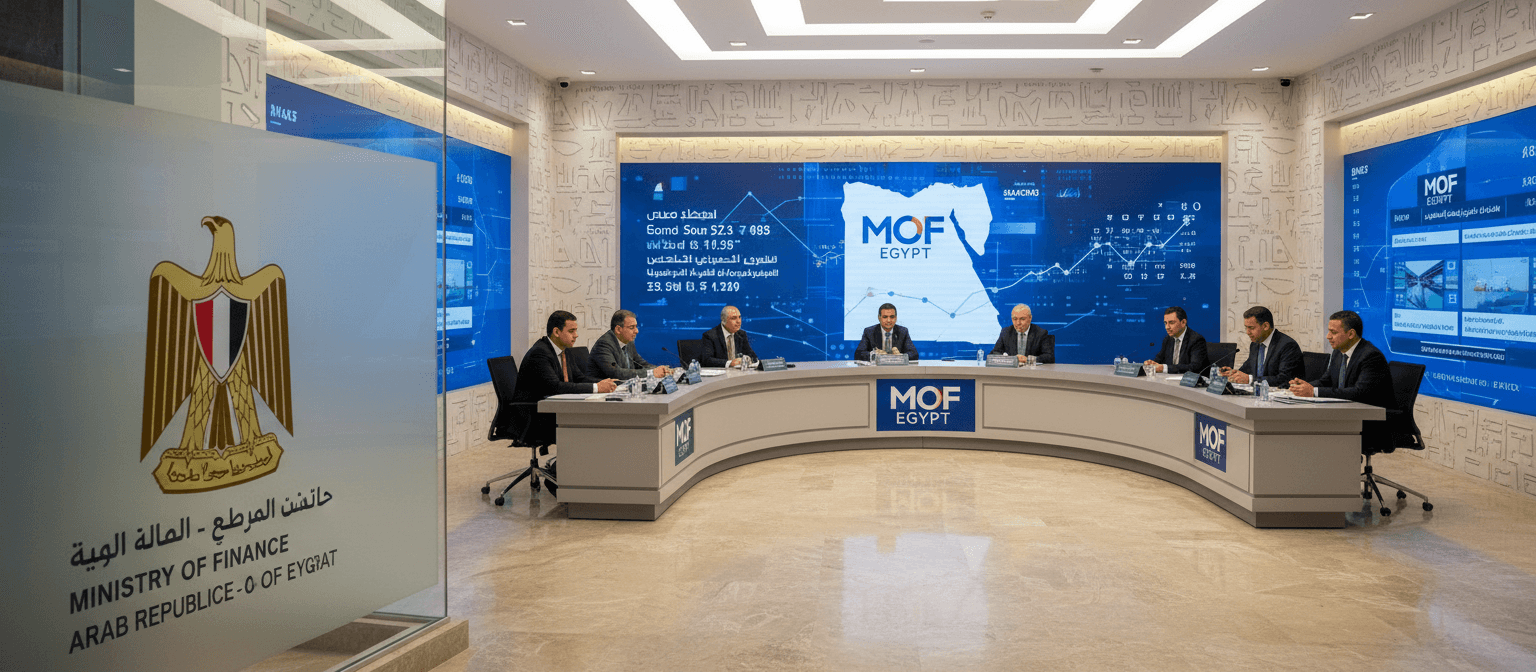
Cairo, Egypt, 17 January 2011 - Egyptian Minister of Finance Dr. Youssef Boutros-Ghali and Nobel Laureate Professor Joseph Stiglitz were among a number of senior thought leaders discussing the effects of widespread macroeconomic reforms in Egypt in a moderated discussion in Cairo. The one-day event, sponsored by Booz & CompanyBooz & Company , included a moderated discussion between Dr. Boutros-Ghali and Stiglitz, as well as a panel discussion that gleaned insight on the reforms from four senior businesspeople. The event was attended by Egyptian Minister of Housing, Utilities and Urban Development, H.E. Eng. Ahmed El Maghrabi; Egyptian Minister of Social Solidarity, H.E. Dr. Ali Al Moselhi; Egyptian Minister of State for Administrative Development, H.E. Dr. Ahmed Darwish and President of CAPMAS (the Central Agency for Public Mobilization and Statistics), Gen. Abu Bakr El Gendy. Since the early 1990s, Egypt has implemented a series of economic reforms - first aimed at stabilizing the economy and then at fueling growth and competitiveness. "Egypt is at a critical moment, as the reforms of the last 20 years have laid the foundation for a strong future," said Dr. Shumeet Banerji, chief executive officer of Booz & CompanyBooz & Company . "Its success in the last few years has been nothing short of remarkable. But challenges remain, which present us with the opportunity to discuss the role of reforms and determine the way forward." In the opening session, Dr. Boutros-Ghali, who heads the Ministerial Economic Committee in charge of overseeing the design and implementation of Egypt's economic reform programs, spoke of the need to continue down the path of reform--but also of the difficulty and complexity of doing so, especially in terms of hot-button items like subsidies for energy and food. While subsidies can be addressed from a financial perspective, the government has a duty to protect the disadvantaged segments of society. "Subsidization is an important component of our economic policy," he said. "We know it's inefficient. We know it needs to be reformed. But we need to do it in a way that preserves what we have achieved so far." Dr. Stiglitz, 2001 Nobel Prize recipient in Economics and the former Chief Economist of the World Bank, noted that contrary to the popular belief that trickle-down economics will enable all levels of society to benefit from growth, making wealth trickle down takes work--and that Egypt's government is committed to finding an efficient way to help the 40 percent of the population that lives on less than $2 per day. The second panel featured prominent businesspeople, including Moataz Al-Alfi, CEO of EK Holding and chairman of Americana Group-Egypt and Tri-Ocean Energy; Hatem Dowidar, CEO of Vodafone Egypt; Joe Saddi, chairman of Booz & CompanyBooz & Company and managing director of the firm's Middle East business; and Mona Zulficar, founding partner at Zulficar and Partners Law Firm. Dr. Stiglitz participated in the second panel as well, which addressed the factors that might inhibit the business community from achieving the success that will keep Egypt on its path to growth. A critical topic raised during the second panel was the need to integrate Egypt's "shadow economy" into the formal private sector a process hindered by the bureaucracy that still exists despite recent reforms. "Small and medium-sized enterprises have no incentive to move into the formal sector," said Ms. Zulficar. "We need a different system that is simpler and easier." Another crucial issue for Egypt's business community is the alleviation of poverty and the cultivation of a strong middle class. "At the very bottom of society, people are struggling and they need systems that will allow money to trickle down," said Mr. Dowidar. He added, however, that globalization and new investments are revitalizing the middle class by creating jobs. Both panels were moderated by Tim Sebastian, television journalist and BBC presenter. Urgent Priorities for Egypt Egypt's recent growth, which has been sparked by widespread economic reform and liberalization, has been the strongest that the country has seen in years: Reforms are credited with having achieved a stable economy, with continuous growth of approximately 5 percent over the past decade, allowing the country to improve its rankings in several economic indices. However, the economy faces medium- and long-term challenges. The government needs to balance the growing cost of food and energy subsidies as well as grapple with a growing budget deficit (approximately 8.4 percent of GDP). These challenges coincide with a need to improve Egypt's ability to attract foreign investment. Egypt will also need to address the demographic issue of its coming youth bulge, as the size of Egypt's workforce swells by more than 20 million people over the next 25 years: Although the country has successfully created 400,000 jobs per year for the past few years, it will need to create 750,000 jobs per year for the next several years. Mr. Saddi concluded the meeting with an overview of the areas in which Egypt will need to focus in the coming years to address these challenges. "First, Egypt must focus on improving labor productivity--which depends on improving access to education as well as the quality of education," he said. "Second, the country must retarget subsidies, including food and energy, to free up resources for other purposes. Third, Egypt must increase the ease of doing business; and finally, the country must continue investing in infrastructure, which will improve the country's supply chain and thus reduce costs." With these measures, he said, Egypt will be able to maintain its strong position among developing countries and continue its impressive track record of growth. (Source:Zawya) Egypt's Boutrous-Ghali, Nobel Winner Stigliz Discuss Egypt's Reforms
 Next article