
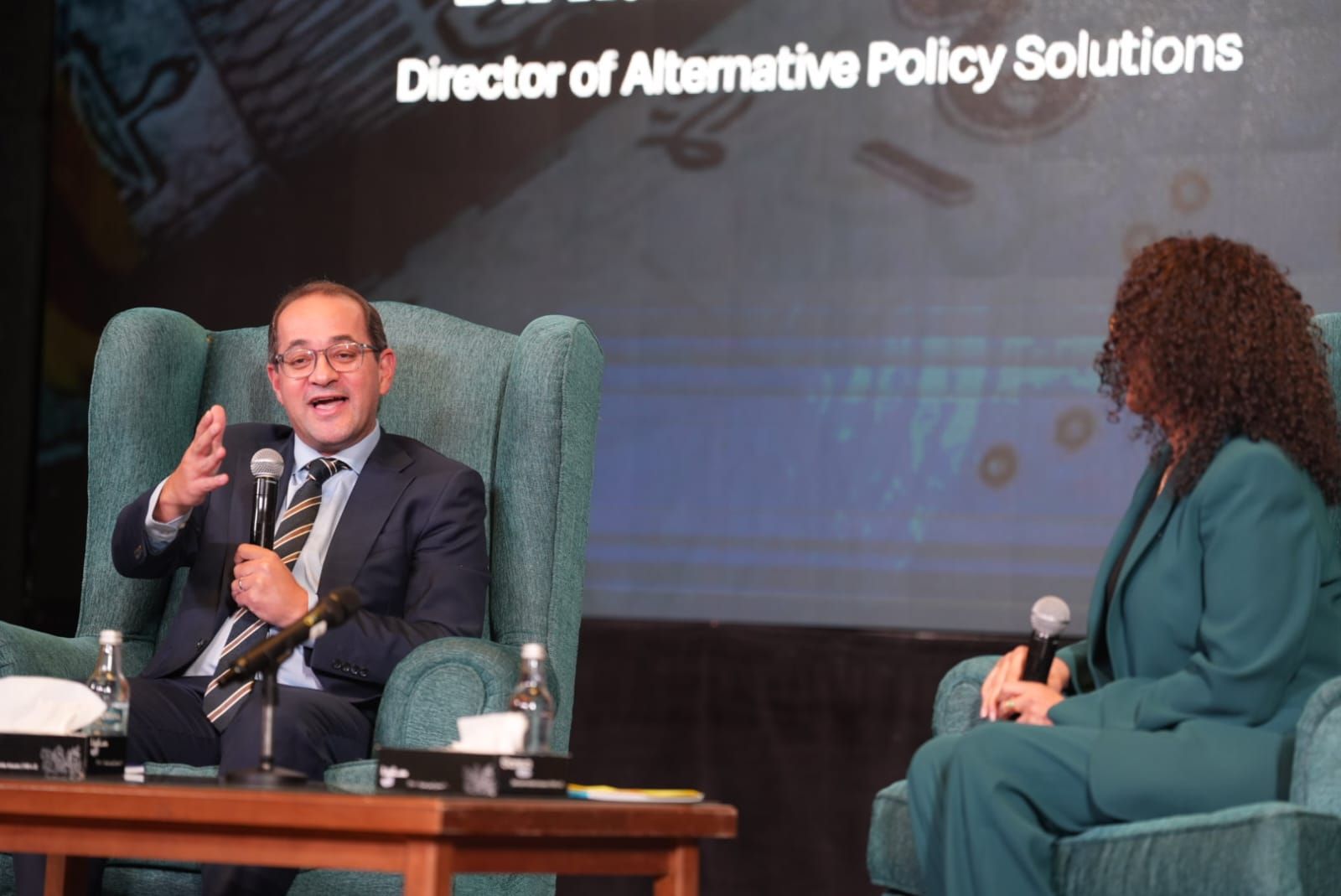
Finance Minister Ahmed Kouchouk at the American University in Cairo:“The Economy Is Breathing Again and Improving — The Private Sector Now Accounts for 60% of Investments”
Kouchouk: Egypt’s economic and fiscal position is solid and improving — many indicators are outperforming expectations.
Finance Minister Ahmed Kouchouk affirmed that the Egyptian economy has started to “breathe again and improve,” with the private sector now driving growth and accounting for 60% of total investments. He emphasized that Egypt’s economic and fiscal position is strong and steadily improving, noting that the country has achieved many results surpassing initial targets.
Speaking during an open dialogue at the American University in Cairo, moderated by Dr. Rabab El-Mahdi, Professor of Political Science, Kouchouk said Egypt expects to complete the fifth and sixth reviews of its economic reform program with the International Monetary Fund (IMF) soon.
He pointed out that the debt-to-GDP ratio has fallen by 10 percentage points over the past two years, while it has risen by around 7 percentage points in other emerging markets during the same period.
The Minister explained that the Ministry of Finance now repays more than it borrows, and that external debt related to the state budget has declined by USD 3 billion over the past two years. He added that the government is working to convert part of the debt into investments, and that any exceptional revenues are directed toward debt reduction.
Kouchouk stressed that prioritizing debt reduction and improving debt indicators reflects policy coherence and consistent national priorities.
He noted that Egypt is adopting tax policies that support economic growth and encourage private sector participation by reducing burdens and simplifying procedures for investors.
The Minister explained that the government’s current focus is on broadening the tax base, protecting taxpayers’ rights, and improving service quality within a comprehensive framework of “trust-based partnership” with the business community. He added that the Ministry is coordinating with the Minister of Investment to unify fees and service charges, and to revise the solidarity contribution system to make it fairer and more equitable.
He stated that the government is working to stimulate the economy and enhance its capacity to attract investment and meet citizens’ needs, noting that budget allocations to support economic activity have quadrupled this year, with priority given to industrialization and exports, especially in emerging and future-oriented sectors.
Kouchouk highlighted the abolition of preferential tax advantages previously granted to state-owned entities engaged in economic activities, describing it as a significant reform that has produced positive results. He revealed that new initiatives are being launched with the Micro, Small, and Medium Enterprise Development Agency to promote entrepreneurship and support startups.
He added that additional incentives will be introduced for businesses joining the simplified and integrated tax system, to encourage their growth and underline the advantages of formal sector participation.
“I strongly support every reform that enhances people’s lives,” Kouchouk said, stressing that his focus remains on better serving citizens. He noted that public spending on health and education rose by 21% last year, exceeding the average growth rate of all other sectors. The government aims to further increase spending on health and education in the coming phase, focusing on programs with the greatest direct impact on people’s lives.
 |
 |
 |
 Next article