
IMF Committee Urges Cooperation to Achieve 'Balanced Growth'
-
The IMF's International Monetary and Financial Committee, whose 24 members collectively represent 186 nations, also called for efforts to reduce budget deficits and sovereign debts in a communique.
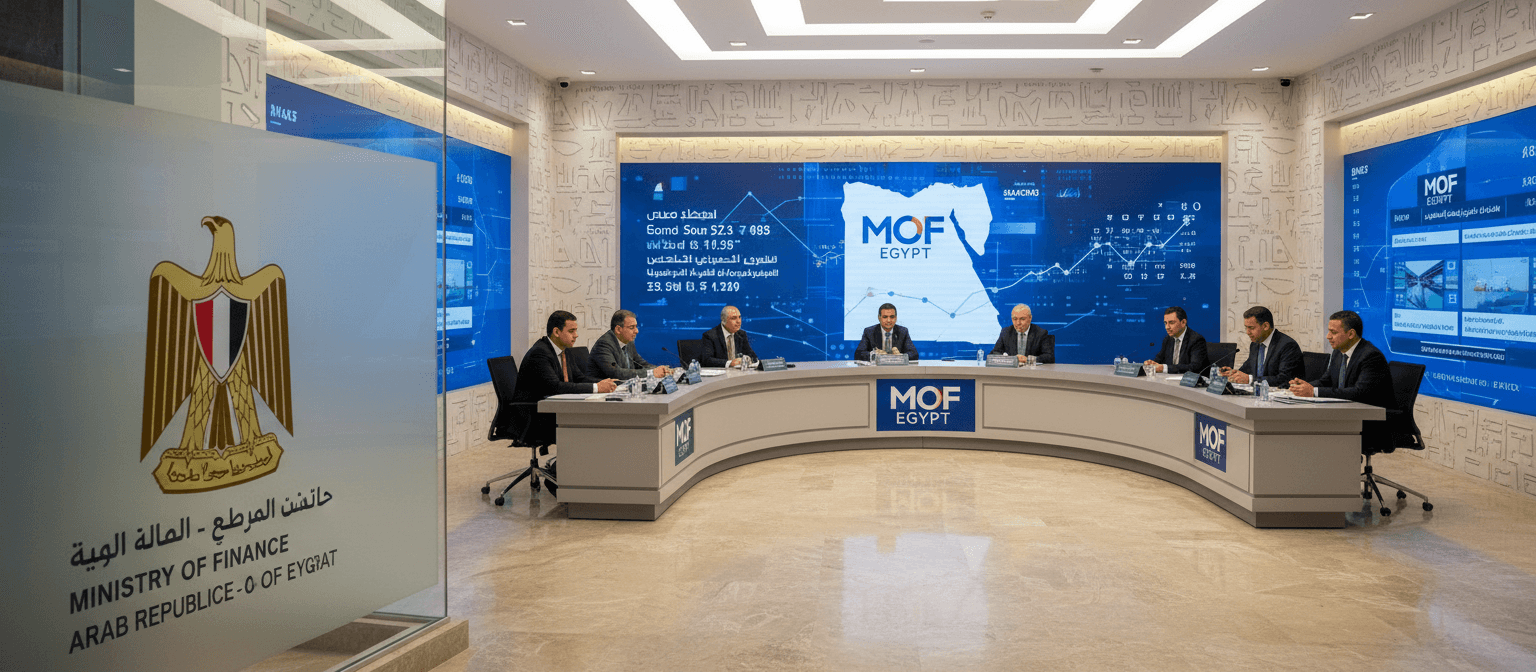
At a news conference following the meeting, IMFC Chairman and Egyptian Finance Minister Youssef Boutros-Ghali said that, while the global economy "seems to be recovering ... we are not out of the woods yet." He said the recovery is "uneven" among the IMF's 186 member nations and suggested financial stability remains fragile and vulnerable.
IMF Managing Director Dominique Strauss-Kahn, appearing alongside Boutros-Ghali, said the world is entering a "fourth phase" in which economies are recovering but at different speeds and face continued problems, such as high unemployment and heavy debt burdens.
Strauss-Kahn said he had nothing further to say about negotiations with Greece on a loan package to help that country ease its debt service burdens until those talks are completed.
Both men stressed the need for the IMF to continue to reallocate IMF voting rights among member countries to give a greater say to developing and emerging market countries.
"Signs of a strengthening economic recovery are encouraging but many challenges remain that need to be tackled collaboratively," the communique said. "We will continue to work to phase in country-specific exits from stimulus, recognizing the diverse pace of recovery and potential spillovers across countries and regions."
"We remain firmly committed to implementing policies that are collectively consistent with our goals for a balanced and stable global economy, renewed job creation, and price stability, and to avoiding protectionism in all its forms," the statement continued.
"We are strongly committed to ensuring sustainable public finances and addressing sovereign debt risks," the communique went on.
The finance ministers and central bankers, including Treasury Secretary Timothy Geithner and Federal Reserve Chairman Ben Bernanke, called on the IMF "to continue strengthening its monitoring of global economic and financial developments and providing policy advice." And they welcomed the IMF's support of the Group of 20's so-called "Mutual Assessment Process," which is supposed to guide members toward "strong, sustainable, and balanced growth."
The IMFC communique declared that "strengthening financial regulation, supervision, and resilience remains a critical but as yet incomplete task."
"We agree to redouble efforts to forge a collaborative and consistent approach for a stable global financial system that can support the economic recovery," it said. "We support continued efforts to map systemic risks and transmission channels, and look forward to a report on addressing data gaps; we also support exploring a possible voluntary financial data dissemination standard based on broad consultation, while respecting country circumstances."
"We look forward to discussing the work by the Fund on a range of options on how the financial sector can make a fair and substantial contribution to cover the burden of extraordinary government support, while reducing excessive risk-taking, helping to promote a level playing field, and respecting country circumstances," the communique added.
The communique committed the IMFC members to work to complete a review of IMF quotas by January 2011 to increase the voting rights of developing countries.
Boutros-Ghali said there are signs that the recovery is "strengthening" but said there is "unevenness" and "weaknesses." He said market confidence also remains vulnerable to negative developments. Without referring directly to the Greek debt crisis, he said sovereign debt issues pose a threat to stability.
Strauss-Kahn outlined the challenges facing the world as it emerges from financial crisis and recession. He said the world has gone through three phases and is now entering a fourth.
The first phase, he said, was the "panic" that ensued after the September 2008 collapse of Lehman Brothers. The second, was when Group of Seven leaders agreed in London on a coordinated set of actions and stimulus measures and the IMF's lending resources were beefed up.
Next came "a kind of relief" and a belief in most countries that "the crisis is behind us, that recovery is at the corner of the street," said Strauss-Kahn.
At this third stage, although the recovery proved stronger than expected, Strauss-Kahn said the IMF warned that "We shouldn't lose any kind of caution" but "should take into account all of the downside risks." Although "a double dip (recession) was not (the IMF's) baseline," he said the IMF warned that "some trail risks should be taken into consideration."
Now, in the "fourth phase," the IMF chief said there is a growing awareness that "recovery is here" and is "faster in some parts of world," such as Asia, but "more sluggish in other parts of the world, especially the European Union, Japan also."
Even if recovery is underway, Strauss-Kahn said countries "really have to take into consideration the downside risks that may arise."
He said the "most important area (of risk), of course, is unemployment, which is still rising in some countries" in the industrialized world.
The second area of concern, he said, is "the heavy burden of debt in advanced countries." The third is "the question of capital flows and inflows into emerging markets," creating "the risk of bubbles."
Following these phases of "panic, action, relief" and the "phase of rebuilding," Strauss-Kahn said there needs to be a "rebuilding of financial institutions" to "try to make them more effective:" and "prevent the likelihood of any crisis in the future."
He said there are three main areas where change is needed:
First, in the area of financial sector reform, he called for international "coordination." He said "the rules of the game have to be the same or (at least) consistent."
"It doesn't have to be done the same way everywhere ... but when something is done we have to look at the consequences for the rest of the world" and "avoid regulatory arbitrage," he said.
Strauss-Kahn said he gets "this strong sense of stronger demand for coordination and (a need to) work together."
Secondly, he said the IMF will do as the G-20 requested in Pittsburgh and pursue a "multilateral assessment program" to help countries achieve "balanced growth.
He said initial assessments have led to "optimism" in various countries, but he said they "may be a little too optimistic."
He said the IMF will provide G-20 leaders recommendations on dealing with the unemployment and debt problems at their June meeting in Toronto. He said the goals is to raise countries' growth potential.
The IMF managing director said "the third area where multilateralism has been strong is IMF governance and quotas." He said strong commitments were reached Saturday morning "to complete the shift in quotas and also governance reforms by the end of the year."
"That's very important," he said, adding, "it's mostly a political question." He said those reforms will only be achieved "on the basis of political will."
Asked what message he would like to send to the Greek public as the IMF negotiates a loan package with Greece rumored to be about $30 billion, Strauss Kahn said, "Greece shouldn't fear the IMF ... .We are there to try to help them."
Greeks "should see the IMF as it is today, as a kind of cooperative organization" that strives to "work together to help those in trouble ... . Today Greece, tomorrow maybe another one. ... The IMF is trying to provide advice on behalf of the entire international community."
Boutros-Ghali said the IMF has changed since the 1980s and 1990s when he said there was "a stigma" to borrowing from the Fund. He said the IMF has jettisoned its old philosophy of only making loans to help countries deal with their balance of payments problems with little regard for their other difficulties.
(Source: iMarketNews.com)
 Next article