
In Arab Labour Organisation round table meeting, Dr. Samir Radwan:Agreement soon with World Bank to grant USD 2.2 billion in loans to Egypt
-
IMF delegation to Egypt considers support for Egyptian economy boosting program
A package of measures to stimulate the economy and enhance its ability to create job opportunities
Jassem Al-Manaee: small and medium enterprises make available 90% of job opportunities in Turkey, compared to 40% in the Arab World
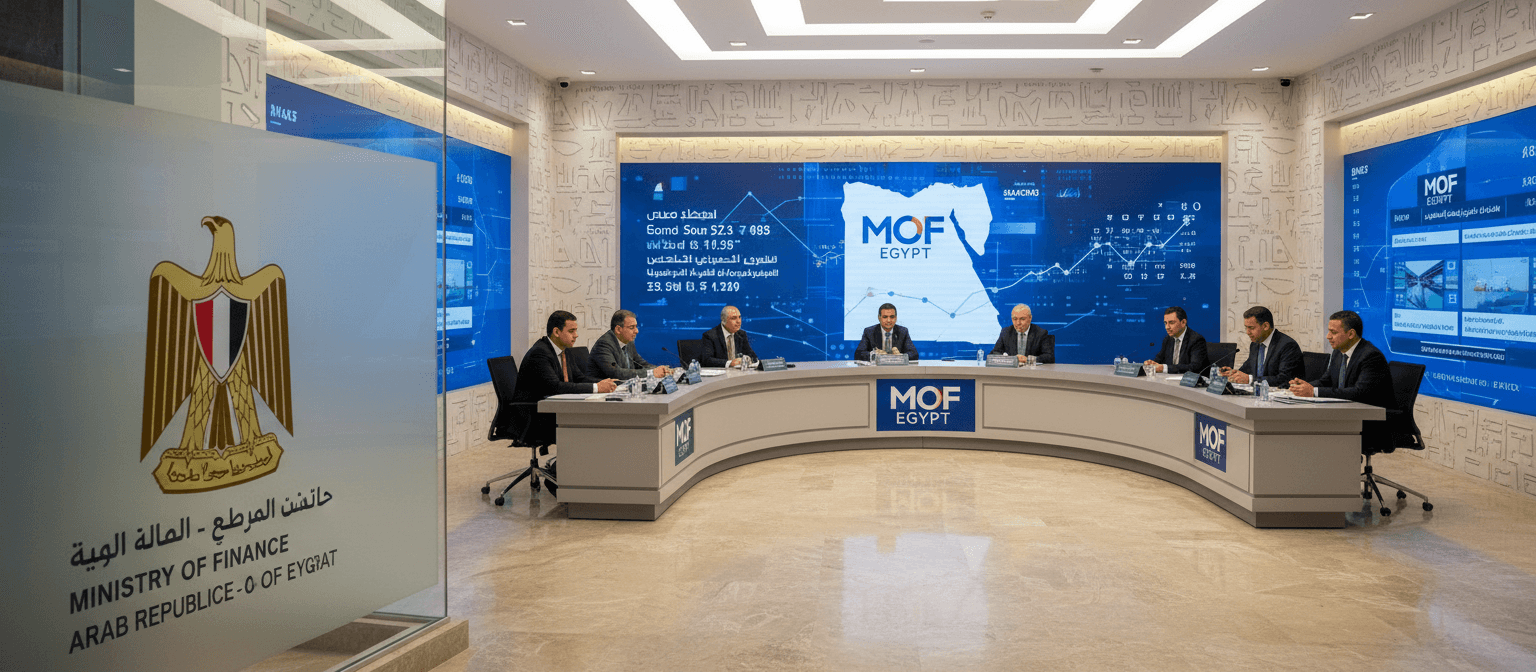
Egyptian Finance Minister, Dr Samir Radwan, revealed an imminent agreement with the World Bank to grant Egypt USD 2.2 billion in loans. A delegation of the Bank will visit Cairo within the coming few days to study ways of giving support to the Egyptian government program to offset repercussions of the current financial crisis. The delegates will also review the Egyptian vision of the required economic development and reform programs aimed at changing the existing mode of growth to guarantee fair distribution to all the brackets of the society.
The Ministry of Finance is preparing to declare a package of new measures aiming at stimulating the economy and enhancing its ability to create more jobs. This is included in a program of three basic branches: this package of measures; establishing a body to organise small and medium enterprises to secure support and enhanced capabilities of creating job opportunities with decent pay; and establishing a number of national giant projects, such as developing the Suez Canal, the development passage, and Red Sea zone development linking it to the Nile-valley governorates and low-cost, good-quality housing projects.
Dr. Radwan revealed these points while participating in functions of an Arab Labour Organisation (ALO) round table on the current developments in the Arab World and their impact on employment. The session was moderated by ALO Chairman and Arab Monetary Fund Director General Jassem Al-Manaee.
The Egyptian Finance Minister said the Egyptian state budget for the new fiscal year will display a quality change in the funds allocated to human development, as allocations will be increased in the educational, health, housing and transportation fields, to enhance human resources capabilities.
As regards the impact of the revolutions in the Arab World on conditions of Egypt, the minister asserted that the democratic changes that took place in Egypt in 18 days represent what an entire generation could not achieve, even partially, in 40 years. The Arab revolutions reject a previous type of development which adopted a criterion of mere percentage of growth and neglected fair distribution of the fruits of growth and enhancing real participation by people in development. The previous type of development failed as well in containing newcomers to the labour market because supply of an unqualified workforce could not satisfy the real needs of the market.
Currently, the Egyptian economic policy tackles issues of poverty and support of the limited-income strata not as a social burden but as 40% of the population who can contribute to economic development when policies of enhancing their capabilities as productive elements are followed.
On the other hand, ALO Chairman and Arab Monetary Fund Director General, Jassem Al-Manaee, asserted that the revolutions and strikes witnessed by the Arab World have led to a number of negative repercussions impacting the economic situation, including the loss of many jobs and laying off a large number of expatriate Arab workers, such as Egyptians and Tunisians returning from Libya.
Al-Manaee warned of the impact of the continuation of these events on the credit ranking of the Arab states and of the decreasing capabilities of the Arab banking system to generate more financing to stimulate Arab economy, as borrowing grows more costly. The current events have made it difficult for companies to pay off debts as a result of work disruption and the losses incurred in the service and tourist sectors, in addition to shrinking investment and flight of Arab capital outside the region, and pressures on Arab currencies against foreign currencies. All these repercussions are placing further burdens on the budgets of the Arab countries with internal upheavals.
The current events, Al-Manaee adds, raise important questions about the economic model the Arab countries will adopt after the popular upheavals, whether there will be effects on economic reforms, the role of the private sector in development, the subsidy file which has swollen in response to interest group demands' and supporting the social welfare networks, and the possibility of the continuation of such a trend.
Al-Manaee called for adopting a new model of economic development which focuses on the industrial and agricultural sectors in addition to small and medium enterprises, that represent 90% of the total job opportunities in Turkey and Malaysia compared to only 40% in the Arab World. He hailed the Arab initiative to establish a fund for financing such enterprises, which requires developing the legislative structure together with improving education and training to secure a chance for this important sector to take off.
The Arab Countries General Union of Commercial, Industrial and Agricultural Chambers Secretary General, Emad Shehab, emphasised the necessity to create a better environment conducive to investment to lure Arab investors to set up joint projects, which are now a meagre 15% of the total Arab investments abroad. Total Arab investments in 2010 reached around 1.4 trillion dollars, compared to 1.2 trillion in 2009. However, inter-Arab investment retreated from USD 26 billion in 2010 to around 23 billion this year.
The private sector, he added, leads economic development in the Arab region. In addition, private enterprises contribute around two thirds of domestic production in many of the region's states.
Concerning the measures taken by a number of Arab states (Saudi Arabia, Egypt, Algeria, Jordan, Tunisia, Syria, Morocco, Yemen, Mauritania, and Oman) to offset repercussions of current events, a paper prepared by the Arab Labour Organisation revealed that the measures are numerous in the Arab countries and they target enhancing living conditions of the citizens, securing job opportunities, raising wages, facilitating house hunting, training opportunities, subsidising staple goods, reducing tax burdens and offering facilities for loans to small enterprises.
The paper noted that in Saudi Arabia, for instance, 13 such measures cost the government around 100 billion Saudi Riyals. Another batch estimated at USD 93 billion has been aproved. The measures include supporting social loans, granting financial aid to unemployed workers, supporting social security beneficiaries, subsidising citizen-housing funds and vocational societies, raising basic salaries, approving regulations of extra benefits and rights, and forming a supreme committee to solve the unemployment problem with a mandate to submit its solutions within four months.
(Source: Ministry of Finance)
 Next article