
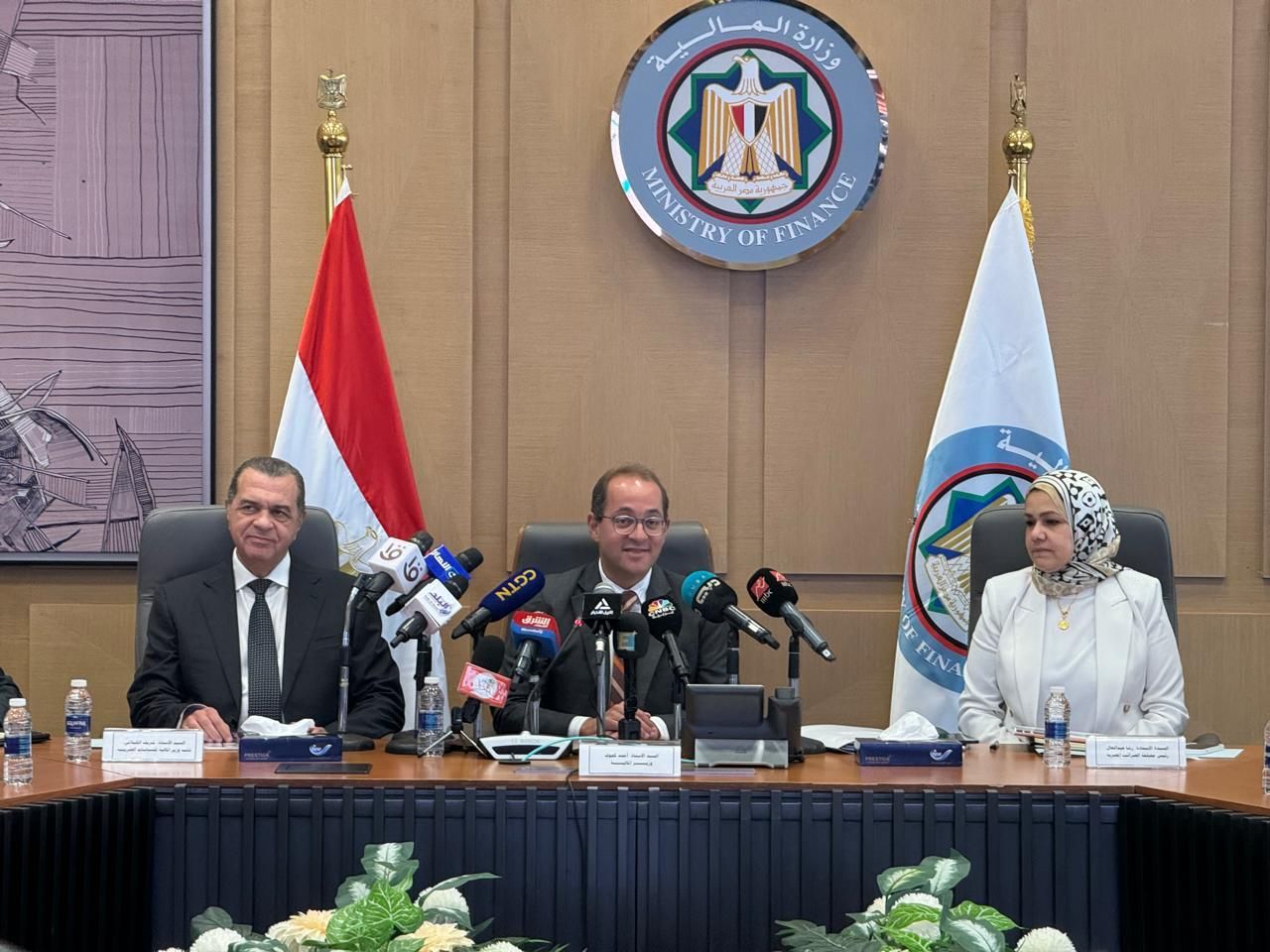
Minister of Finance, Ahmed Kouchouk, in his first press conference on the results of the financial performance for the year 2023-2024
Our priority is to improve services for citizens "as much as we can", and work hard for a better future.
- The Egyptian people are the real owners of the budget and we will work hard to maximize resources to create sufficient financial space for spending on areas of human development and significant matters to citizens.
- The budget numbers, no matter how much they improve, will be meaningless if they are not reflected in improving the performance of the economy, the competitiveness of the business community, and improving the standard of living.
- The challenges are difficult for the people, the economy, and the government. The State is "trying to bear the greatest burden".
- 500 billion pounds for the first and second phases of the national project "Decent Life" to improve the lives of half of Egyptians.
- We did not levy new taxes last year, and we achieved 30% increase in tax revenues", which was spent on health, education, and social protection programs.
- Achieving a revenue growth rate of 60%, exceeding the growth rate of expenditures.
- Non-tax revenues increased by 190% as a result of diversifying the state's sources of resources, the most important of which is the treasury obtaining 50% of the "Ras Al-Hikma" deal.
- We will rearrange our priorities so that public spending is more socially conscious in order to contain the impact of economic reforms.
- 25% increase in spending on education, 24% in health, and 20% for the social protection sector, exceeding the growth rate of expenditures without debt service, which amounted to less than 18%.
- Allocations for support and social protection more than doubled and reached 550 billion pounds compared to 2020/2021.
- Despite all circumstances, petroleum subsidies exceeded 165 billion pounds, subsidies for food commodities increased to more than 133 billion pounds, and "Takaful and Karama" pensions exceeded 35 billion pounds.
- We paid the Social Insurance and Pensions Fund dues by about 185 billion pounds, bringing the total we paid to 913.2 billion pounds until the end of June 2024.
- We continued initiatives to encourage investment and support economic activities despite global, regional and local challenges.
- 9 billion pounds subsidies for exports and about 11 billion pounds subsidies for industrial production, up from only one billion.
- Health insurance and medicine subsidies for the needy in one year increased from 1.9 billion pounds to 3.4 billion pounds.
- 2 billion pounds subsidies for the social housing program for low-income people and 3.5 billion pounds to provide natural gas services to houses.
- Increasing transportation and transfer allocations to 8.1 billion pounds to provide passenger transport services at less than their economic cost as much as possible.
- We delivered more than 28,000 new cars to citizens under the presidential initiative to replace vehicles with a green incentive that exceeded 718 million pounds.
- 65 billion pounds is the total value of export subsidies actually paid from the budget for more than 3,000 companies since October 2019 to date.
- 2,527 investors benefited from the initiative of subsidies for productive sectors with about 80 billion pounds, and the treasury bore the difference in interest rates.
- "We know where the problems are and we are working to solve them". Our financial policies will be directed to support further human development, production and exports.
- The debt service bill is still high due to high inflation and interest rates. We aim to reduce it to 35% of total expenditures in the medium term.
- Public investments have declined. We are working hard to increase the volume of private investments with a focus on investments directed to industry and exports and "we still need more work" to increase the private sector's contributions to economic activity.
- We were able to rationalize spending by 2.2% of GDP and reduced the budget deficit to 3.6% and achieved a primary surplus of 6.1% including the returns of “Ras Al-Hikma”.
- We will make a greater effort to reduce the debt rate. We have an integrated program to reduce government debt in the medium term.
- We are working to reduce the cost of debt and diversify the investor base, currencies and markets and extend the life of the debt in order to enhance the "degree of confidence" of the Egyptian economy.
- Simplified mechanisms for settling disputes. Tax neutrality helps attract more investments in economic activities.
- The comprehensive digital transformation in the tax administration has begun to help us on expanding the tax base and contain new taxpayers.
- The internal debt rate of the budget agencies decreased by 4.7% of the GDP despite the difficult economic conditions.
- We aim to maintain achieving annual primary surpluses to reduce the debt-to-GDP ratio to less than 85% by the end of the next fiscal year.
- The external debt balance of the budget agencies decreased by more than $3.5 billion by the end of June 2024, by a reduction rate of more than 4% compared to June 2023.
- 7 years is the average life of the external debt of the budget agencies by the end of June 2024.
- We have begun to regain investor confidence, and we continue to target entering new markets, paying dues and regaining Egypt's credit rating to its positive path.
- The cost of debt has begun to decline in Egyptian international sovereign issuances.
- International bond yields in the secondary market decreased by 6% for a period of 3 years and 3.1% for a period of 5 years compared to their prices last February.
- Insurance rates against payment risks for five and ten years decreased by 224 and 168 points, respectively.
- We issued Chinese Panda Bonds and Japanese Samurai Bonds at Very Low Cost.
- Activating the Government Securities Market and automating and developing financial and tax settlement systems.
- Focusing on Variable Yield Issues to attract a new base of investors in government debt instruments.
Minister of Finance, Ahmed Kouchouk announced, in his first press conference after assuming responsibility, the results of the financial performance for the year 2023/2024, saying: “The priority is to improve services for citizens as much as we can. We are working hard to make a better future. The Egyptian people are the real owners of the budget, and we will also work hard to maximize resources to create sufficient financial space for spending on human development areas and everything that matters to citizens.” He explained that the budget figures, no matter how much they improve, will be meaningless if they are not reflected in improving economic performance, business competitiveness, and improving the standard of living.
The Minister said that the challenges are difficult for the people, the economy, and the government. The state is “trying to bear the greatest burden,” noting that there are 500 billion pounds for the first and second phases of the national project “Decent Life” to improve the lives of half of Egyptians and raise the level of services provided thereto.
“We did not levy new taxes last year and what we achieved in tax revenues with a 30% increase was spent on health, education and social protection programs,” added the Minister, addressing the citizens, explaining that a revenue growth rate of 60% was achieved, exceeding the growth rate of expenditures, and non-tax revenues increased by 190% as a result of diversifying the sources of state resources, the most important of which is the treasury obtaining 50% of the “Ras Al-Hikma” deal.
The Minister indicated that we will rearrange our priorities so that public spending is more sensitive to the social dimension in order to contain the impact of economic reforms, noting that the volume of spending on education was increased during the past fiscal year by 25%, the health sector by 24% and the social protection sector by 20%, exceeding the growth rate of expenditures without debt service, which amounted to less than 18%.
Kouchouk explained that the allocations for subsidies and social protection increased by more than double and amounted to 550 billion pounds compared to 2020/2021, and despite the circumstances, the subsidies for petroleum products exceeded 165 billion pounds, the subsidies for food commodities increased to more than 133 billion pounds, "Takaful and Karama" pensions exceed 35 billion pounds, and we paid the Social Insurance and Pensions Fund dues of about 185 billion pounds, bringing the total we paid to 913.2 billion pounds until the end of June 2024.
The Minister confirmed that we continued the initiatives to encourage investment and support economic activities despite the global, regional and local challenges. The subsides for export promotion amounted to 12.9 billion pounds, bringing the total value of export subsidies actually paid from the budget for more than 3,000 companies to 65 billion pounds since October 2019 to date. The subsidies for industrial production amounted to 11 billion pounds, up from only one billion. The subsidies for health insurance and medicines for the needy also increased in one year from 1.9 billion pounds to 3.4 billion pounds, and the subsidies for the social housing program for low-income people amounted to 10.2 billion pounds. There is 3.5 billion pounds for delivering natural gas services to houses. Transportation and transfers allocations were increased to 8.1 billion pounds to provide passengers transportation service at less than their economic cost as much as possible.
The Minister said that 2,527 investors benefited from the initiative to support productive sectors with about 80 billion pounds, and the treasury bore the difference in interest rates, noting that we delivered more than 28 thousand new cars to citizens under the presidential initiative to replace vehicles with a green incentive exceeding 718 million pounds.
"We know where the problems are, and we are working to solve them. Our financial policies will support more human development, production and exports” added the Minister, explaining that the debt service bill is still high due to high inflation and interest rates, and he said that we aim to reduce it to 35% of total expenditures in the medium term.
The Minister confirmed that public investments have declined, and that we are working hard to increase the volume of private investments with a focus on investments directed towards industry and export, and “we still need more work” to increase the private sector’s contributions to economic activity, explaining that we were able to rationalize spending by 2.2% of the GDP, reduce the budget deficit to 3.6%, and achieve a primary surplus of 6.1%, including the returns of “Ras Al-Hikma.”
The Minister said that we will make a greater effort to reduce the debt rate and that we have an integrated program to reduce government debt in the medium term. We are working to reduce the cost of debt and diversify the investor base, currencies and markets and extend the life of the debt in order to enhance the "degree of confidence" of the Egyptian economy, noting that simplified mechanisms for settling disputes and tax neutrality help attract more investments in economic activities.
The Minister pointed out that the comprehensive digital transformation in the tax administration has begun to help us expand the tax base and include new taxpayers, explaining that the internal debt rate of the budget agencies decreased by 4.7% of the GDP despite the difficult economic conditions, and that we aim to maintain achieving annual primary surpluses to reduce the debt rate to the GDP to less than 85% by the end of the next fiscal year.
The Minister explained that the balance of external debt of the budget agencies decreased by more than $3.5 billion by the end of June 2024, with a reduction rate of more than 4% compared to June 2023, noting that the average age of the external debt of the budget agencies reached 12.7 years by the end of June 2024.
“We have begun to regain investor confidence and we continue to target entering new markets, paying dues, and regaining Egypt's credit rating to its positive path” said the Minister , adding that the cost of debt has begun to decline in Egyptian international sovereign issuances, and that the yields of international bonds in the secondary market decreased by 6% for a period of 3 years and 3.1% for a period of 5 years compared to their prices last February, and that the rates of insurance prices against payment risks for a period of five and ten years decreased by 224 and 168 points, respectively, noting that we issued Chinese Panda bonds and Japanese Samurai bonds at a very low cost. He added that we worked to activate the government securities market and automate and develop financial and tax settlement systems, with a focus on variable-return issuances to attract a new base of investors in government debt instruments.
- Minister of Finance
 Next article