
Minister of Finance to International Investors at The Egyptian British Business Association in London: Efforts to Improve Economic Performance to be Doubled Through Balanced Fiscal Policies in The Coming Phase
Minister of Finance Ahmed Kouchouk announced a significant ramp-up in efforts to improve the country's economic performance through balanced fiscal policies and deeper reforms aiming at fostering a competitive and resilient economy.
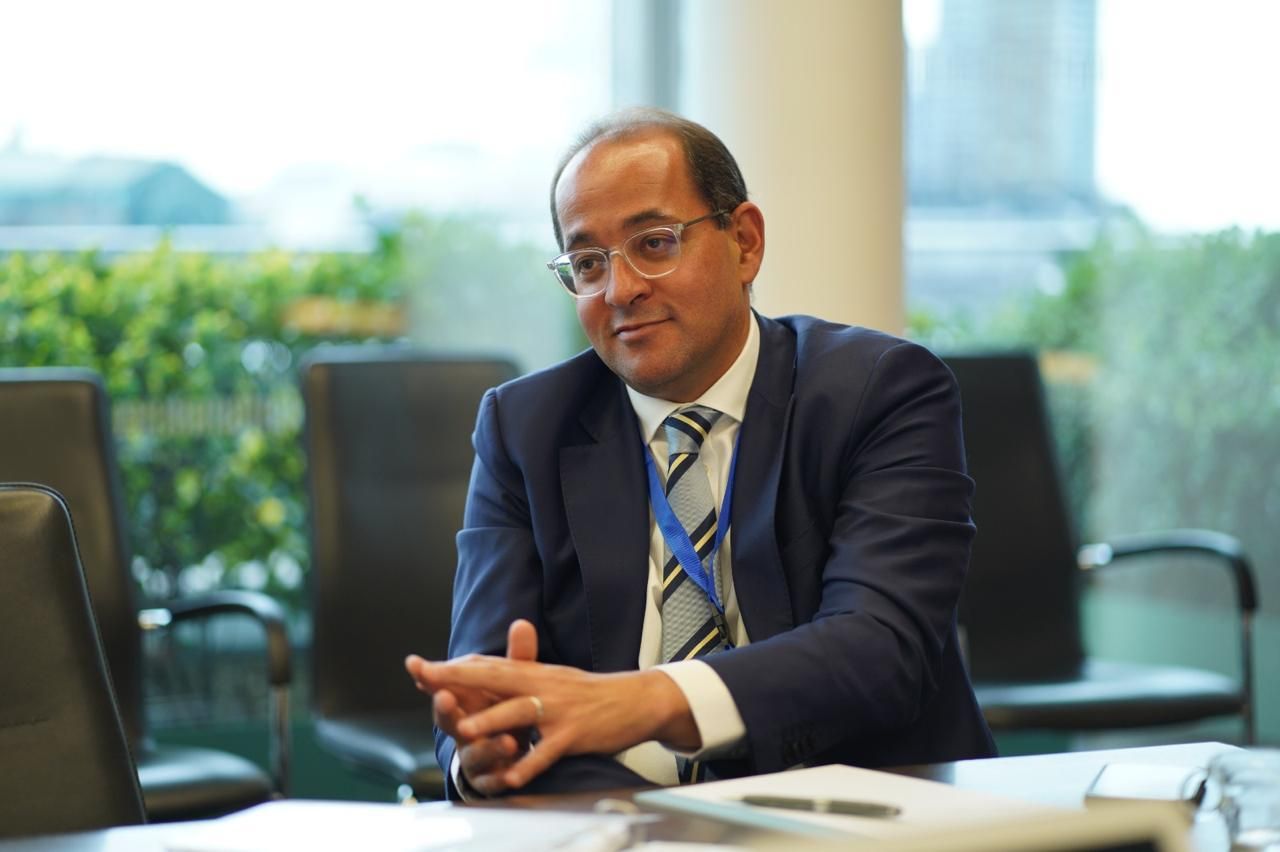
Speaking during a meeting with international investors at the Egyptian British Business Association in London, Kouchouk emphasized that Egypt is not in competition with other nations, but rather focused on enhancing its own economic competitiveness.
“We’re not competing with anyone. Our goal is to strengthen Egypt’s position as a hub for investment and a gateway to regional markets,” said Kouchouk.
He pointed to Egypt’s “competitive growth structure,” consistent policymaking, and commitment to creating a business-friendly environment. The government, he added, is working as a unified team to deliver credible and sustainable economic reforms, enhance investor confidence, and maintain macroeconomic stability.
Ongoing Reforms to Improve Investment Climate
Kouchouk highlighted the government's drive to implement ongoing tax and customs reforms aiming at streamlining procedures, reducing costs, and accelerating clearance times. He confirmed that specialized teams and international partners will be brought in to enhance the efficiency of tax services and to safeguard taxpayer rights through new legislation and administrative decisions.
“We are fully committed to achieving tax justice and fostering a transparent, predictable environment for both local and international investors,” he said.
The minister also revealed increased cooperation with international entities to offer high-quality services to investors. Budget allocations for economic activities have been doubled, with EGP 45 billion earmarked in the current fiscal year to support exports and stimulate industrial expansion.
Private Sector Driving Growth
Kouchouk stressed that economic reform is not about short-term wins but about building long-term confidence and predictability. He cited diversification of economic resources, productivity growth, and innovation as key government priorities.
Despite global headwinds, Egypt achieved “very good” financial results in the past fiscal year, according to Kouchouk. Non-oil exports rose by 33%, and private sector investment surged by 77%, underscoring the sector’s growing role in driving economic momentum.
He credited these gains to the government’s reform agenda, particularly in the tax system.
“Last year, we launched a modernized tax reform path, and we’re already seeing its impact in building trust with the business community,” he said.
Boost in Tax Revenues Without New Burdens
In a notable fiscal achievement, tax revenues grew by 35% year-on-year, without introducing additional burdens on taxpayers. Kouchouk attributed this to the efforts exerted for expanding tax base and settlement of long-standing disputes. Key reforms included the introduction of a simplified tax system for small and medium enterprises (SMEs), voluntary dispute settlement mechanisms, and provisions allowing taxpayers to resubmit or revise previous filings without penalties.
The government received nearly half a million new and amended tax returns, and the private sector voluntarily paid an additional amount of EGP 60 billion.
“When the private sector grows, it creates a more attractive environment for foreign investment, and that translates into stronger revenues and a healthier economy,” Kouchouk concluded.
The Minister of Finance reaffirmed Egypt’s commitment to carrying out real, measurable reforms to ensure sustained economic progress and long-term investor confidence.
 |
 |
 |
- وزير المالية
 Next article