

Minister of Finance: Value Added tax (VAT) realizes justice and eases burden on lower-income segments
-
As for July, salaries of employees in the state’s administrative body shall be electronically paid
Cash payment of amounts more than 1000 EGP shall be prohibited in government auctions and tenders
Senior taxpayers shall be obliged to electronically pay their taxes… there are benefits for encouraging small enterprises
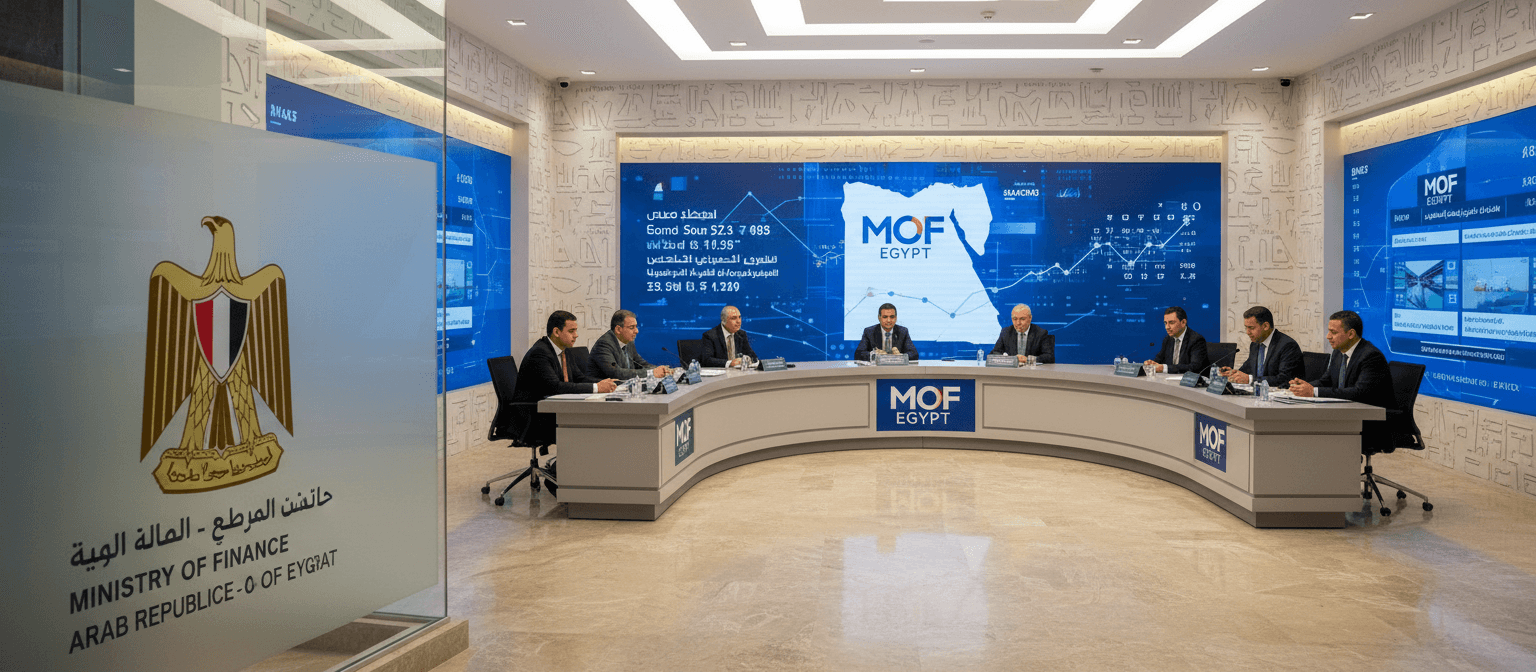
Minister of Finance, Hany KadryDimian, confirmed that the most important feature in Value Added Tax draft law is realizing social justice and almost maintaining full social dimension. According to a tax study upon which the Ministry depends in preparing the law, the new draft law aims to re-distribute tax burden; whereas the ratio of 20% of the highest-income segments shall incur the largest part, shall be gradually reduced on the lower-income segments till the ratio of 20% of the lowest-income segments who shall not bear any tax burdens.
The above mentioned was said at the opening of the Egyptian Tax Society Conference by the Minister, under the slogan “the obligatory transformation to VAT law and application mechanisms”.
He said that the draft law also shall improve business environment, as well as control inflation rates, mentioning that since 2005, despite investment conditions, there is a continuous demand to transform to VAT.
The Minister affirmed that transformation to Value Added Tax is a necessary matter to face application problems of sales tax system which have been arisen since 1991, law issuance year, and for more than 25 years. He indicated that the Ministry is interested in conducting social dialogue on the new draft law to benefit from observations and opinions of business community, experts and tax accountants to establish a better law meeting society aspirations regarding tax justice and easing burdens on the ratio of 20% of the lowest-income segments.
The minister clarified that he is keen on conducting a social dialogue regarding the legislative amendments to tax and customs laws in order to realize the best legal structure, confirming that he will respond to each observation and suggestion submitted by business community and tax experts which reveal any legislative defect in the proposed draft laws. Also, he indicated that, for example, the article of forming appeal committees in value added law shall be amended; so the current or former employees in Tax Authorities are prohibited from chairing such committees.
He said that the law shall determine a general tax rate, as well as all goods and services shall be subject to such rate along with making a list of all exempted goods and services for the most needy care and the low-income segments, mentioning that the raw food materials shall be fully exempted from tax; whereas the latest survey of families spending distribution on different sectors shows that 39% of income is directed to food, which still considered as a large percentage despite its decline of about 50% a few years ago.
He confirmed that the draft law will provide more benefits for encouraging small and medium enterprises to voluntary join the state’s umbrella, mentioning that he requested an international institution to provide Egypt with successful global experiences to integrate informal economy to the formal one in order to formulate an Egyptian model which contains the entire sector and develops its capabilities.
The Minister revealed that previously tax revenues, after excluding tax revenues from Suez Canal, Central Bank of Egypt and Egyptian General Petroleum Corporation, reached about 11-12% of GDP, however, currently the ratio reduced to the ratio of 8% against 25% in other countries.
He mentioned that Ministry of Finance has already started to re-structure tax system via expanding tax brackets, unifying the maximum income tax at 22.5% instead of 30%, reducing the assessed tax on capital goods, e.g. equipment and machinery, from 10% to reach 5%.
He clarified that expanding tax base targets to increase tax returns and realize justice in distribution of tax burden on the capable segments; so that the state shall meet society needs, especially public services. The Minister mentioned that both Health and Education sectors’ budgets will be increased according to the constitutional entitlements, mentioning that this step requires 135 billion EGP in the new budget without any inflation impacts.
The Minister added that expanding tax base targets to reduce inflation rates, so the lower-income segments can benefit from the economic reform, indicating that transformation to VAT realizes social justice and delivers a message to all investors that there are true reforms in the state’s financial policies.
He announced many procedures to reduce cash circulation rates in the community within the efforts exerted by the State to transform to noncash community which depends more on completing financial transactions via banking system instruments, e.g. checks and electronic transfers that eliminate the risks of cash circulation; such as theft, loss and error counting , mentioning that the most important procedure is the electronic payment of all salaries of employees in the state’s administrative body, estimated in the current fiscal year budget at about 207 billion EGP starting from next July’s salaries via electronic cards through ATM machines affiliated to the commercial banks and government ATMs network.
The Minister said that such procedure shall achieve further recovery in local markets, especially that the financial allocations are multiplied through its circulation by individuals to reach 800 billion EGP.
He mentioned that executive instructions shall be soon issued to prevent cash payment for more than 1000 EGP in government auctions and tenders; the amounts shall be paid whether through banking accounts and checks or electronic payment to suppliers as one of electronic payment instruments that Ministry of Finance supervises its implementation, including electronic payment of taxes and customs dues.
He added that one of the procedures that have been already applied, is obliging senior taxpayers to pay their tax dues through an electronic payment instrument and any cash payment for more than 1000 EGP shall not be accepted.
He said that the Egyptian economy will go forward to reach the expected levels only by changing cash payment methods which control transactions in markets to electronic instruments ensuring that cash will be maintained in the banking system, therefore enhancing liquidation levels in national economy and benefiting from its impact on growth of economic activity.
Mamdouh Omar, tax advisor to Minister of Finance, affirmed that the VAT draft law shall eliminate about 95% of the reasons for disagreement and disputes with tax community which are caused by sales tax law.
He said that the proposed law will also solve a lot of problems, e.g. tax rate distortions on some inputs and its final product; as some industries are subject to a tax rate that is less than the tax rate imposed on its inputs, leading to some undisbursed due variations for producers, along with solving the problem of paid interests using installment sale system as such interests are exempted from tax.
He also presented the most important reasons for transformation to VAT. First, there are various tax categories under sales tax, ranging from 5, 25, 45%, in addition to 10% of public rate, which causes disagreement with tax authority concerning goods or services categories, sometimes tax on inputs are higher than tax on outputs; incurring the registered tax burdens.
Second, the registration limit is varied; 45 thousands EGP is imposed on industrial producer and service provider, while 150 thousands EGP is imposed on wholesalers and retailers, however there is no registration limit for importer; causing inequality between various registered taxpayers. Third, non-fully taxation; all industrial goods are taxable, whereas 17 services only are taxable; causing many disputes with the registered on applying the manufacturing concept as long as it is not decided yet whether goods are taxable or not. Fourth, no fully deduction for inputs; as law allows inputs of goods while no services tax is deducted from it. Fifth, imposing additional tax; at 0.5% for each week delay in tax payment by taxpayer, forming burden on the registered taxpayer reaching to 26% of tax value per year. Sixth, delay in sales tax refund. He said that the suggested law shall not permit selling operations to the anonymous persons, entailing tax evasion at good circulation levels, income tax evasion; whereas the law shall oblige producers to issue detailed bills, including buyer’s name, his tax number, as cash bills will not be taken into consideration.
Mamdouh Omar, tax advisor to Minister of Finance, assured that the Egyptian Tax Authority takes many procedures to immediately apply the suggested after being issued by the political leadership; all the required papers, certificates and forms are printed to be distributed on the registered taxpayers.
Regarding the current registered taxpayers’ situation related to sales tax if the registration limit reaches to 1 million EGP, as per tax experts suggestion, which exceeds the actual size of their businesses, Omar revealed that the law stipulates that they will be continuously registered without any procedures to be taken by the registered taxpayers.
In this context, the Minister confirmed that the Ministry will respond to any request submitted by small and medium enterprises to register in VAT even if the business size is less than registration limit, provided that it shall not be less than 50 thousands EGP in order that such enterprises can benefit from the law’s advantages. He said that non-registration doesn’t mean tax exemption; currently a tax system shall be formulated to combine income and sales tax to be applied on small enterprises to ensure the regularity of tax community.
Head of Tax Authority, Dr. Mostafa Abdel Kader, said that the draft law didn’t resolve yet three key elements; public tax rate, registration limit, exemption list for goods and services, mentioning that such elements are one of the social dialogue goals as we aim to recognize tax community vision regarding the same.
He affirmed that VAT draft law is completely an Egyptian industry, prepared by a team of MOF’s experts without intervention from any entity, as the IMF’s experts have a role only in assessing the key elements of the project and its application mechanisms in light of different international experiences.
Head of Egypt Tax Society, Ahmed Shawki, praised that Minister of Finance, Hany KadryDimian, is interest in participating in the conference and conducting a social dialogue to discuss VAT draft law, the mechanisms of successful application, in presence of the premium elite of experts, specialists and business community.
He added that the government, before Egypt Economic Development Conference - EEDC – held in Sharm El-Sheikh, was keen to send serious message to participants and international community, represented in issuance of some legislations that motivate investment, e.g. Investment Law that amend the provisions of investment guarantees and incentives law 8/1997, Corporations, Partnership Limited by Shares, Limited Liability companies Law 159/1981, Income Tax Law 91/2005, Sales Tax Law 11/1991. In addition to the cabinet’s statement which includes the economic group approval on standardizing income tax rates in Egypt, at a maximum of 22.5%.
He said that standardizing tax rates includes also economic areas with special nature for new projects and it will be fixed for 10 years at least, besides a package of other procedures to improve investment environment, including collecting sales tax via Value Added mechanisms, allowing the full deduction of direct and indirect inputs, amending both Customs and Sukuk Laws.
He said that the Society organizes the conference entitled “the Obligatory Transformation to VAT” to discuss how tax community can be prepared to such transformation, the pros and contras of scaling up service tax in a way that doesn’t affect citizens, with full and simple clear exemption list in order not to be interpreted as exemption or law distortion, as well as the definitions of law terms have to be accurately expanded, imported services should be taxable, which may be a matter of discussion on increasing tax burden indirectly on the consumer as the non-resident is subject to taxation and natural or legal person who benefits from supplying imported service, in particular for manufacturing purposes, will incur tax burden.
He added that such system will be successful in case of doubling training courses to Tax System in order to face the requirements of law application and raise awareness of citizen and registered taxpayer phase, how to control billing, especially for informal economy, requesting that tax policies pursued by the Egyptian Tax Authority should be reconsidered as Tax Authority shall determine specific tax goals to be achieved to re-turnover of economic activity to realize social justice, attract investment, increase tax proceeds and stabilize legislations.
He mentioned that thinking approach, working and transparent vision and goals have to be changed to realize compatibility and full support to the adopted laws; so that such laws shall not be challenged as unconstitutional or its executive regulations shall take a long time to be issued, indicating that the conference will issue many recommendations submitted to MOF to take the most suitable decisions for the favor of nation and citizens.
Nasr Abo Al-Abbas, affirmed that the VAT draft law includes many benefits, the most significant of which are: eliminate the problems of applying sales tax law, represented in non-deduct all pre-paid taxes on production inputs, unify tax rate on all goods and services excluding few of them with special nature, e.g. alcohol and tobacco products, all goods and services are subject to standard tax rate, deduct all pre-paid Value Added taxes in all goods circulation levels, reduce arrears interest which called additional tax from 26% to the percentage of deduction rate from CBE plus 2%.
Installment sale interests shall not be subject to taxation; reducing the burden on lower-income in installment purchase, medicines and all the related equipment are exempted from taxation, whether they are human, veterinary medicines or prosthetic devices, houses’ consumption, i.e. gas, electricity, water, agricultural products such as vegetables, fruits and grains, rents, government hospital services, health insurance, government education and scientific research are exempted from taxation.
He added that there are many negative points that are expected to be amended in final version of the law, such as the law doesn’t state that all tax procedures should be unified regarding examination procedures despite of issuing the presidential decree to integrate both sales tax and income tax authorities. Inputs used in production of the exempted goods are not deducted, leading to increase the production cost and raise the exempted goods prices, resulting that such exemption shall be in vain.
He said that among the negative points; reducing the prescribed period for submitting the monthly return to only one month instead of 2 months in the current law, which doesn’t provide enough period for the registered taxpayer to collect their sales proceeds upon which taxes shall be paid, tax on machinery and equipment of schedule (1) goods’ producers that are subject to consumption tax, is not permitted to be deducted however the current law allows the deduction of this tax, resulting that such facilities shall be in vain. In addition to inconsistency in some definitions included in the draft law, e.g. using the term of “ the taxpayer” instead of “the registered” in many places in the law, the multiplicity of legal representative who represents the registered however according to law 159 of corporations, the legal representative is chairman of the board of directors.
He mentioned that this draft law doesn’t include any legal articles to address the transition period; as allowing to deduct percentages of disputed taxes against dispute settlement in courts similar to what happened at issuing income tax law. Also, the draft law doesn’t state any tax exemption on supplies to projects established in markets and free zone that are required for the authorized activity.
Tax expert and member in Tax Society, Abdel Rasoul Abdel Hady, assured that VAT draft law is commendable as it remedies the most negative points and the problems of applying sales tax law no. 11/1991 and its amendments, mentioning that the observations of some suggested law articles target to correct any inconsistencies or problems which may appear in the future in its application.
He said that the most important observations of the law’ articles is the trend to increase the registration limit in VAT, which is inconsistent with tax philosophy as it is considered indirect tax imposed on goods and services and not on income, so we request to cancel the registration limit so that all tax community shall be limited and taxable (formal and informal economy).
He said that one of transition articles in the law states the cancelation of all registered taxpayers less than the registration limit which will be determined, however this registered shall be obliged to pay the entire due tax on his goods stock within 2 months from the effective date of this law. This period is not enough and the registered taxpayer may pay the tax from his own money before collecting his sales proceeds.
He added that definitions of the suggested law need more clarification, e.g. terms of “transferred money” and “in-kind rights related to real estate funds” are not determined in the draft law; resulting that real estate investment and development activity may be subject to VAT.
He clarified that an article in the suggested law, related to determine voluntary registration limit within 50 thousands EGP rather than the obligatory registration limit its value is not determined yet, may be challenged as unconstitutional as the Supreme Court of appeal has previously decided to cancel this discrimination in the obligatory and voluntary registration.
He said that the additional tax consists only with VAT if it is approved that the registered collected this tax and didn’t pay to the authority. However if additional tax results from variations of estimating tax base for pure estimated reasons, as depreciation percentage, there is no reason to collect such additional tax. As well as, reconsider the period of amending tax return by Tax Authority to be 5 years against 3 years in the current system, whereas scaling up the period is inconsistent with the law’s philosophy on facilitating to the registered taxpayer. Especially, shorten the period of return amendment shall be a logic request as long as the law targets to reduce the number of the registered and the registered taxpayer shall not incur that the authority is delayed in its examination.
He said that one of the positive points in the draft law is determining the period of tax limitation; whereas such concept is considered as qualitative transfer in tax thinking. Finally, I believe that there is an imperative need to establish a standard law for tax procedures and competent tax courts, especially after issuance of the rule of the Supreme Constitutional Court which states that the ordinary courts shall have no jurisdiction to hear sales tax disputes.
 Next article