


Minister of Finance: “We work for the people” — real estate tax facilitation measures to improve services and simplify procedures
The Minister explained that the priority moving forward is to broaden the tax base, enhance service quality, and strengthen voluntary compliance, all of which contribute to increasing revenues.
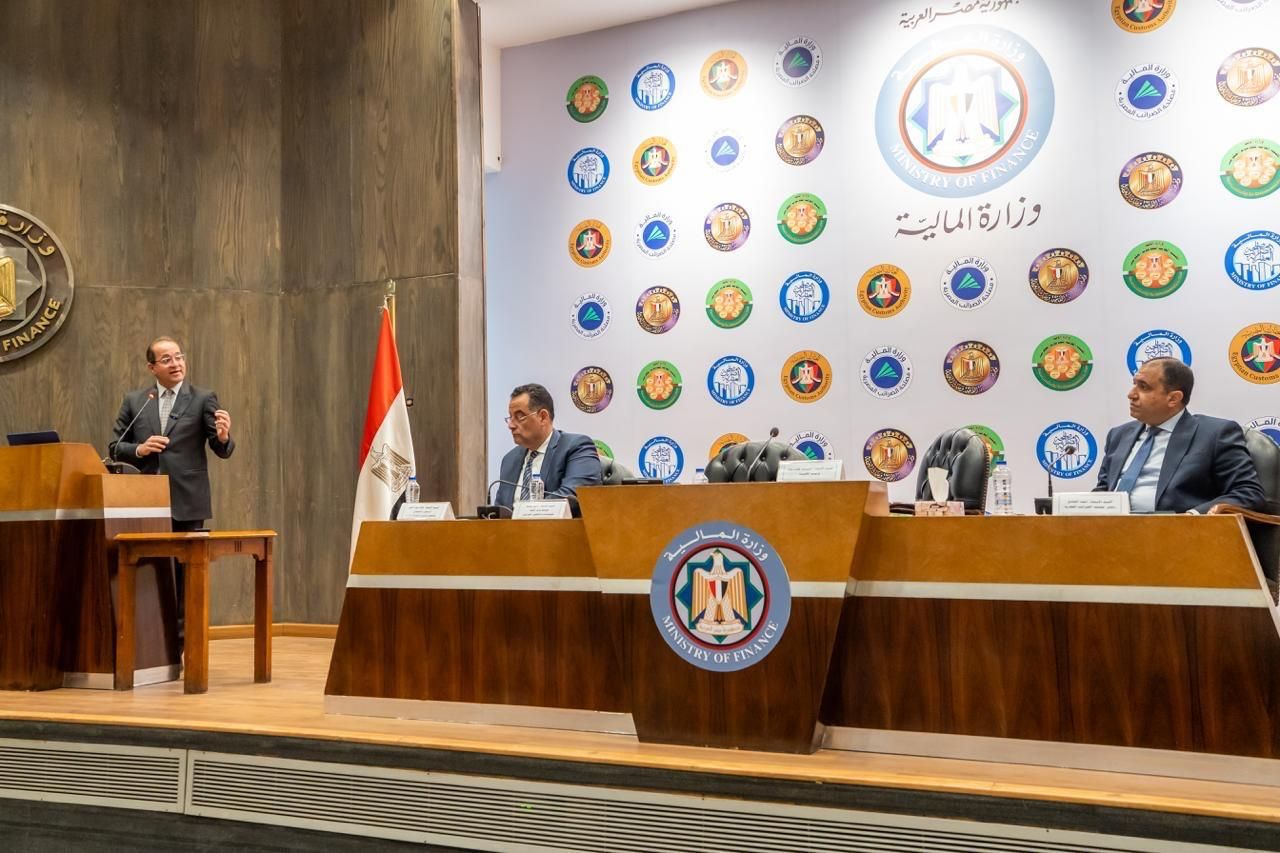
Minister of Finance Ahmed Kouchouk delivered a direct message to leaders and representatives of real estate tax offices, stressing that improving the quality of services provided to citizens is a top priority, stating: “We work for the people, and they must feel a tangible improvement in service delivery on the ground.
Make it easier for citizens — we want them to clearly understand their rights and obligations.”
This came during an open dialogue held with officials across the real estate tax system, where the Minister emphasized that the “real estate tax facilitation measures” represent an exceptional opportunity to bring about a qualitative shift in performance, through the accurate and proper implementation of procedures that ensure simplification and create a positive public perception.
Kouchouk added that employee satisfaction is closely linked to citizens’ satisfaction with the services provided, expressing his aspiration for the real estate tax system to become “a new success story” driven by streamlined and advanced digital services.
He noted that recent progress in tax facilitation has raised the Ministry’s ambitions, adding that the coming phase will witness further improvements in partnership with taxpayers and citizens.
He also stressed the importance of avoiding the creation of unnecessary complications for citizens and instead helping them address any challenges they may face.
He further announced that a mobile application will be launched in mid-April, enabling citizens to access all real estate tax services electronically, from registration to payment.
For his part, Ahmed El-Sadek, Head of the Real Estate Tax Authority, affirmed the Authority’s genuine commitment to development and easing procedures for citizens, noting that all efforts will be directed toward transforming these facilitation measures into a tangible and motivating reality.
He stated that the exemption threshold for primary residential units will be raised to EGP 8 million, and that late payment penalties will not exceed the original tax due under any circumstances.
He also noted that no tax will be imposed if a property is demolished or cannot be utilized due to exceptional circumstances.
El-Sadek added that, for the first time, tax dues and late penalties may be waived in cases of necessity.
Taxpayers will also be allowed to submit a single tax return, either in paper or electronic form, for multiple properties located under the jurisdiction of more than one tax office.
He further pointed to the introduction of a tax incentive for compliant taxpayers who submit their returns on time, offering a 25% discount on tax due for residential properties and 10% for non-residential properties.
In addition, installment payment options will be available, along with electronic payment methods.
In the same context, Khaled Abdel Ghani, CEO of E-Tax, stated that the upcoming mobile application will mark a major shift in facilitating real estate tax services, emphasizing the company’s readiness to provide full technical and technological support to ensure the successful implementation of these facilitation measures for the benefit of both citizens and employees.
 Next article