
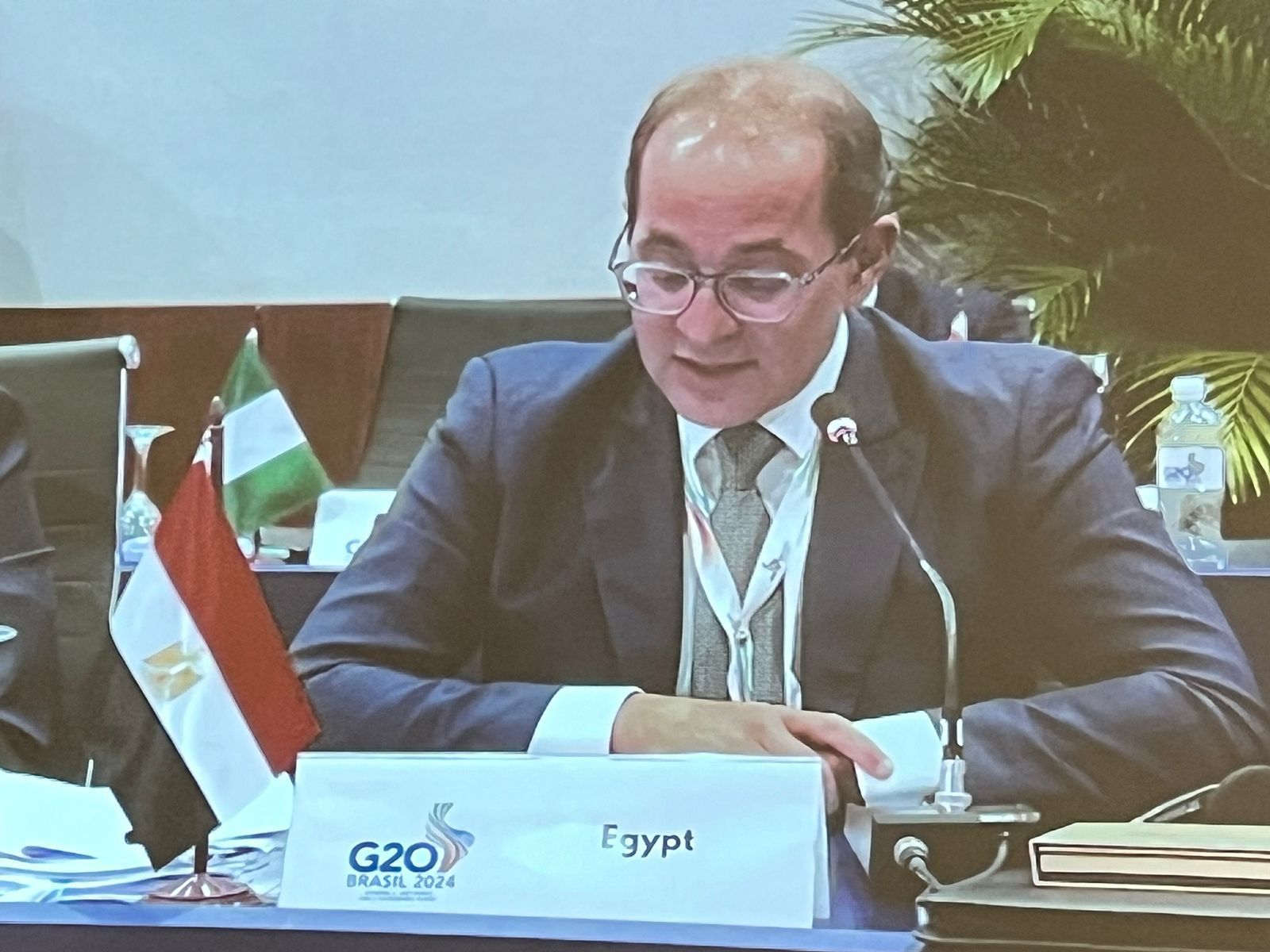
During the second day of his participation in the G20 meetings in Brazil, Minister of Finance declared: “Adaptation to climate change in developing countries imposes heavy financing burdens on "exhausted" budgets
Financial space for emerging economies is still "limited" and does not meet financing needs in light of the intertwined global challenges
- Severe climate change poses a major challenge to development, especially in the agricultural sector
- Enhancing international cooperation to provide new and innovative financing tools at "reasonable" costs
- "Blended finance", "concessional green financing" and "debt-to-investment swap for nature conservation" drive sustainable development efforts
- Multilateral banks should mobilize more capital with "guarantees" and other risk-sharing tools
- Restructuring the international tax system and cooperation to keep pace with the rapid growth of the digital economy
- We look forward to a deeper, larger and faster international movement to establish the foundations of more equitable tax systems for developing countries
- Developing the framework, rules and standards for "international taxes" to become more responsive for the successive challenges
- Preventing the risks of based erosion and profit shifting (BEPS) requires a more transparent and comprehensive international treatment
Ahmed Kouchouk, Minister of Finance, assured that adapting to the negative effects of climate change in developing countries imposes heavy financing burdens on their "exhausted" budgets as a result of the repercussions of global and regional geopolitical tensions, noting that the financial space of emerging economies is still limited and does not meet financing needs in light of these intertwined economic challenges and the associated inflationary wave reflected in the increase in prices of goods and services and the rise in financing and development costs.
In his intervention in the session "Financing for Climate and Sustainable Development" during the second day of his participation in the G20 meetings in Brazil, the Minister added that the severe climate changes that the world has been witnessing recently represent a major challenge to achieving the goals of comprehensive and sustainable development, especially in the agricultural sector, taking into account the targeting of governments for agricultural development, achieving self-sufficiency and food security in light of the state of turmoil in supply chains and its reflection in the volume of commodity supply in local markets for many developing countries.
The Minister pointed out that we look forward to enhancing international cooperation efforts between various advanced and developing economies and international financial institutions to provide new and innovative financing tools at "reasonable" costs, more appropriate to the exceptional global circumstances that severely affect the structure, growth and performance of the global economy, and more responsive to these successive challenges, explaining that "blended financing", "concessional green financing", "debt-investment swaps to preserve nature" and other effective initiatives can play an influential role in the path of advancing sustainable development efforts, especially in emerging economies.
The Minister said that we also look forward to a deeper and more influential role for multilateral development banks in bridging the financing gaps in developing countries, which will help meet their development needs, noting that these global institutions should mobilize more capital through the use of "guarantees" and other risk-sharing tools in a way that contributes to providing soft financing for green transformation projects, especially infrastructure in various sectors.
The Minister explained the importance of the role that international financing institutions can play in consolidating the partnership between the public and private sectors so that the private sector is the engine of development and green growth, which drives the movement of more sustainable economic activities.
In his speech during the "International Cooperation in Taxes" session at the G20 meetings, Kouchouk assured that we look forward to restructuring the international tax system and cooperation to keep pace with the rapid growth of the digital economy, so that the coming period will witness a deeper, larger and faster international movement that helps establish the foundations of more equitable tax systems for developing countries and emerging economies, pointing to the need to develop the framework, rules and standards of "international taxes" to become more responsive to successive challenges, especially those related to collecting tax dues on digital transactions.
The minister said that preventing the risks of based erosion and profit shifting (BEPS) requires a more transparent and comprehensive international treatment, and that we are aware of all the challenges, and we believe in the importance of international cooperation to overcome them and achieve "tax equality" between countries to ensure that they receive their fair shares.
The minister added that international support for local reforms and capacity building enhances the global path of tax justice, explaining the importance of openness to the distinguished international experiences of the G20, and exchanging national initiatives to establish the best tax practices that stimulate investment.
The Minister pointed out that Egypt is working on developing its systems and building its tax capabilities to improve its relationship with the business community and stimulate investment, taking into account the benefit of the expertise and studies of the Organization for Economic Co-operation and Development (OECD) to combat the erosion of the tax base, reduce tax avoidance, as well as work to simplify procedures and ensure the protection of the rights of the business community and taxpayers in general, noting that we have a comprehensive framework for reforms to the Egyptian tax system with a strong political will, aiming to expand the tax base, achieve tax stability and ensure that the tax policy supports investment and development.
The Minister explained that we aim to direct tax revenues to sustainable economic development in order to improve citizens' living standards, taking into account increasing the volume of spending on health, education and social protection.
- Minister of Finance
 Next article