
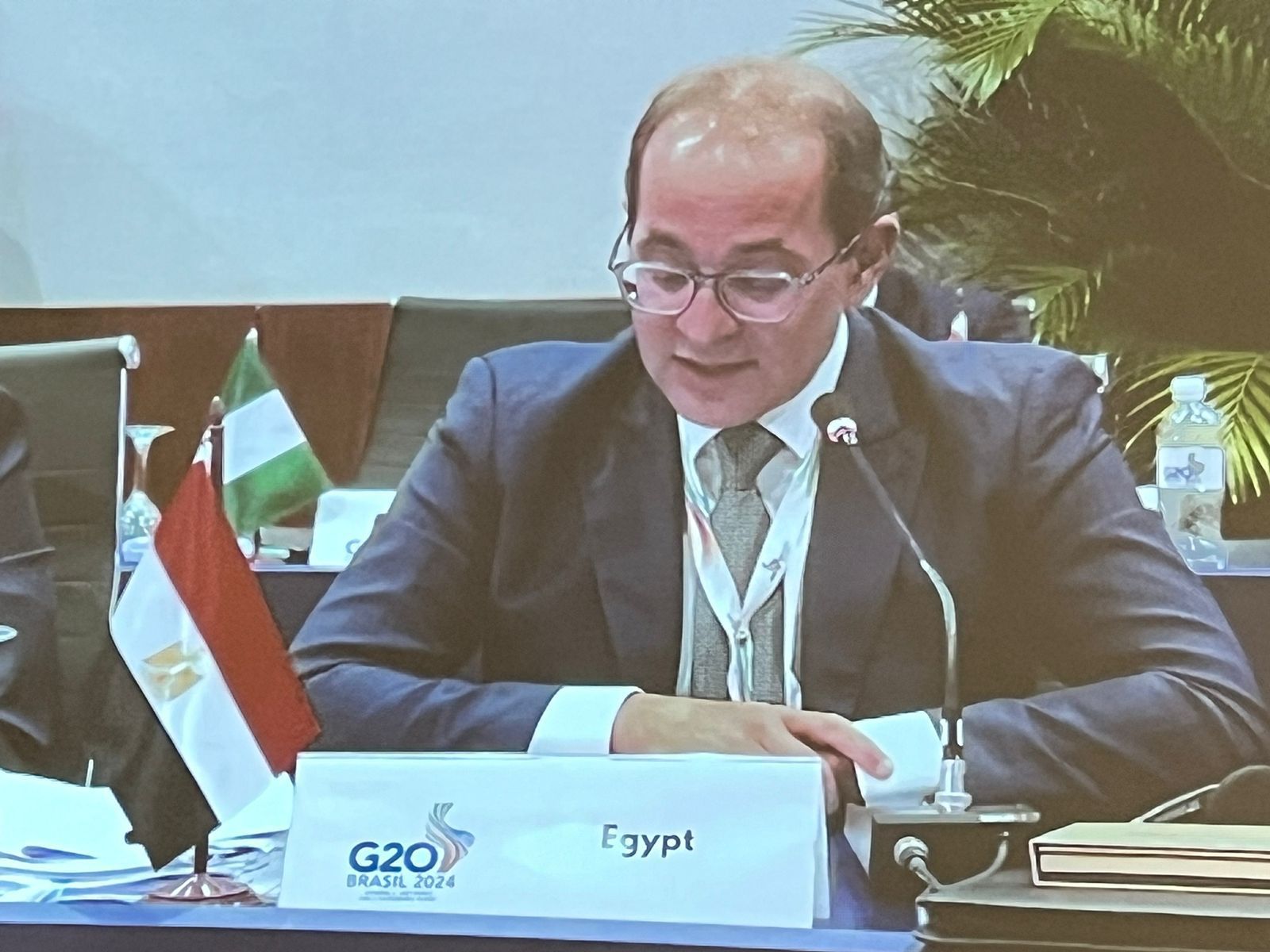
In his intervention during the first day of his participation in the G20 meetings in Brazil, Minister of Finance: Global challenges still represent severe pressures on emerging economies due to the high cost of financing
“Global debt” issues hinder our common goals of fair growth and require comprehensive international solutions
- “Protectionist trade policies” of advanced economies create obstacles to the movement of developing countries’ exports
- Maintaining macroeconomic stability requires more “concessional financing” in the medium term instead of “commercial financing”
- We emphasize the importance of directing reforms to support the competitiveness and productivity of the Egyptian economy
Ahmed Kouchouk, Minister of Finance, confirmed that despite the indicators witnessed by the global economy indicating a move towards a more stable environment, there are still varying levels of recovery, and that global economic challenges still represent severe pressures on emerging economies and developing countries due to the high cost of financing and the decline in foreign direct investment flows directed to emerging countries.
In his intervention in the "Global Economic Outlook" session during the first day of his participation in the G20 meetings in Brazil:” "global debt" issues hinder our common goals of fair growth, which requires comprehensive international solutions that contribute to supporting and assisting emerging economies in a way that enhances their capabilities and enables them to deal positively and flexibly with global shocks” said Kouchouk, explaining that the "protectionist trade policies" pursued by some advanced economies create additional obstacles to the movement of exports from developing countries.
“we look forward to international financial institutions adopting balanced and more stimulating policies for emerging economies, in a way that contributes to helping them meet the financing needs necessary to achieve development and improve the standard of living, along with the commitment to maintaining macroeconomic stability and financial sustainability, which requires more “concessional financing” in the medium term, instead of "commercial financing", taking into account the repercussions of global crises and geopolitical tensions affecting the Middle East and North Africa region, especially the problems that hinder the flow of trade through the vital Suez Canal crossing.” added the Minister.
The Minister assured the importance of directing reforms to support the competitiveness and productivity of the Egyptian economy. He pointed out that Egypt is on the right track to adjust the state's public finances, as we achieved a primary surplus of 6.1% of GDP in fiscal year 2023/2024, driven by exceptional inflows of foreign direct investment due to the Ras Al-Hikma deal, noting that the new government places at the top of its priorities enhancing the growth of the private sector by increasing the competitiveness and productivity of the Egyptian economy by providing more economic opportunities in a competitive and investment-attractive climate, with a focus on mobilizing local and foreign private investments in promising priority sectors, especially export activities, sustainable energy sectors, water desalination and hydrogen, in a manner consistent with targeting the building of a competitive, flexible and growth-capable economy, and facing rapid global changes.
The Minister explained that the government continues to maximize structural reform efforts to enhance the capabilities of the Egyptian economy, and provide sustainable financial spaces for spending on health, education and social protection programs that are most targeted to those eligible for support, while completing the implementation of the ambitious comprehensive health insurance program as a key tool to achieve the dream of all Egyptians in comprehensive and integrated health care for all family members.
- Minister of Finance
 Next article