
Finance Minister Addresses Financial Stability at Bibliotheca Alexandrina Symposium
During the symposium, Kouchouk outlined key pillars of the government’s financial and economic strategy, highlighting the importance of correcting several widespread misconceptions related to Egypt’s economic performance.
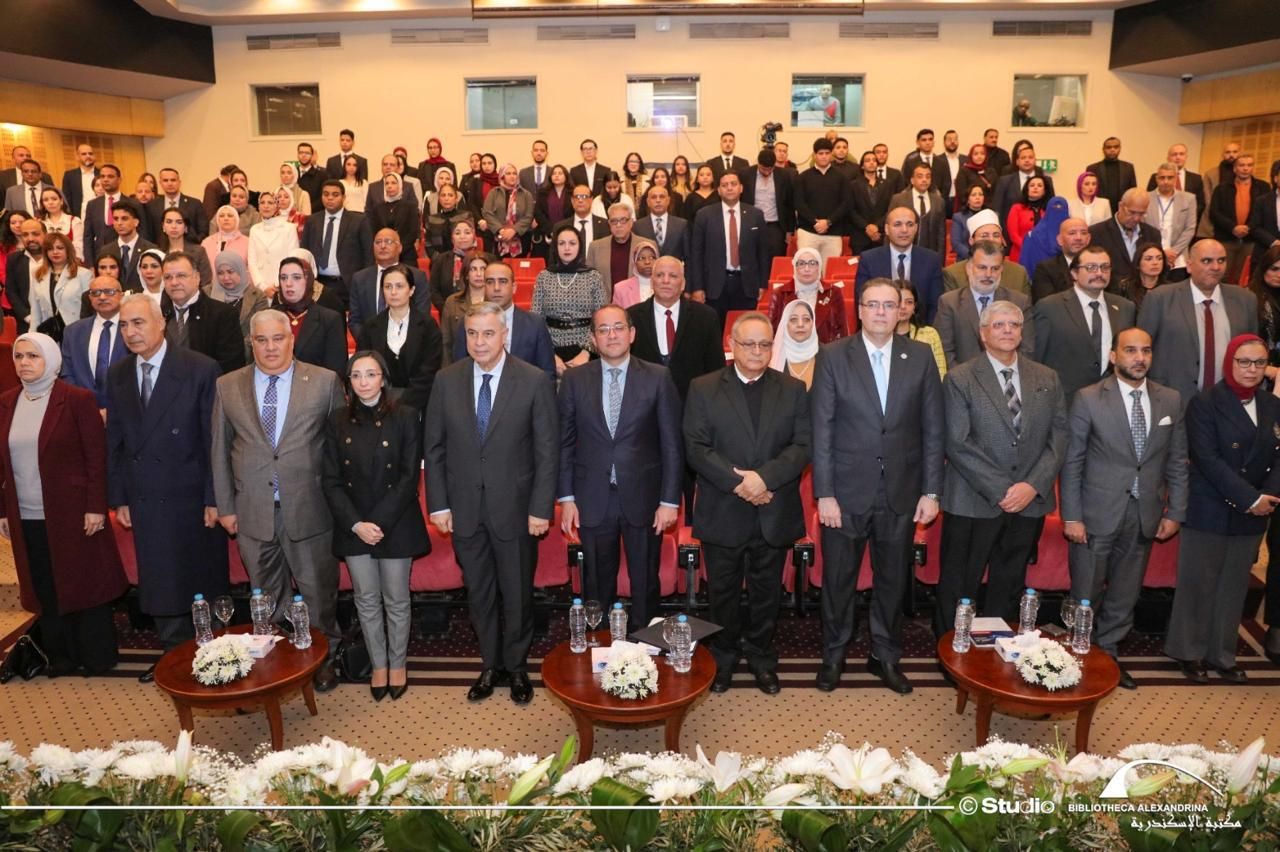
Alexandria, January 5, 2026 – Egypt’s Finance Minister Ahmed Kouchouk participated on Monday in a symposium hosted by the Bibliotheca Alexandrina titled “Financial Stability in Egypt and Sustainable Economic Development,” in the presence of Alexandria Governor Lieutenant General Ahmed Khaled Hassan Saeed and Bibliotheca Alexandrina Director Prof. Ahmed Abdullah Zayed Hegab.
He said the first misconception is the belief that Egypt suffers from excessive imports, stressing that the core challenge lies instead in weak export rates.
Kouchouk emphasised the need to prioritise exports of both goods and services, describing exports as a driving engine for sustainable economic development.
The second misconception, he explained, is the assumption that spending must be rationalised, while the real focus should be on increasing revenues to improve spending efficiency.
The third misconception concerns perceptions of the private sector, which Kouchouk described as highly responsive and a key pillar of growth, sustainability, and competition.
Reviewing recent economic indicators, Kouchouk said government support for economic activity had quadrupled, while spending on education and health increased by around 15%.
He noted that Egypt achieved a growth rate of 5.3%, with exports rising by 29% and industrial sector growth reaching 14%. He added that exports of services increased from USD 5 million to USD 5 billion over the past four years.
Kouchouk also underscored that debt reduction remains a top priority under the directives of Egypt’s political leadership.
He said revenues from major agreements were directed toward improving debt indicators, contributing to a USD 4 billion reduction in external debt, despite an average increase of about 6.5% in emerging market debt globally during the same period.
“We reduced public debt from 96% of GDP in June 2023 to 84% in June 2025, and we expect further improvement in 2026,” Kouchouk said, adding that Egypt is reducing external debt by between USD 1 billion and USD 2 billion annually.
On social impact, the finance minister said the Ministry of Finance, in cooperation with the Ministry of Health, implemented a programme to provide treatment for more than 80,000 critical cases at the state’s expense.
He also referred to the expansion of the Takaful and Karama programme, which supports underprivileged groups and benefits around five million families.
Kouchouk reaffirmed that the Ministry of Finance continues to prioritise increased spending on health and education, alongside targeted social protection measures aimed at improving citizens’ living standards.
- وزير المالية
 Next article